
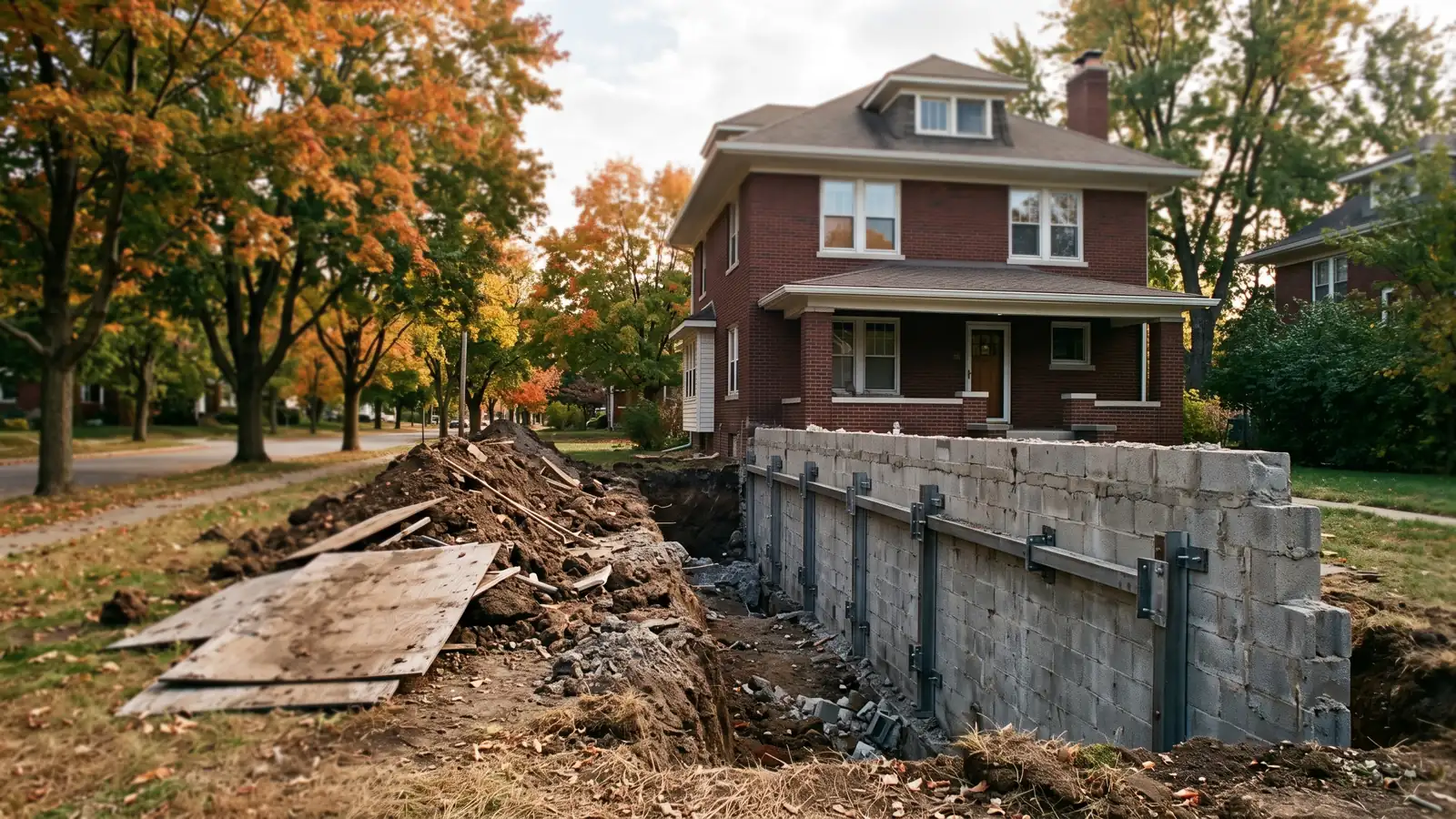
Basement Slab Problems and How Each One Gets Fixed
A basement floor fails in one of four ways, and the shape of the damage usually tells you which. Look at whether the two sides of a crack sit level, whether the floor is high or low, and whether it sounds hollow when you tap it with a broom handle.
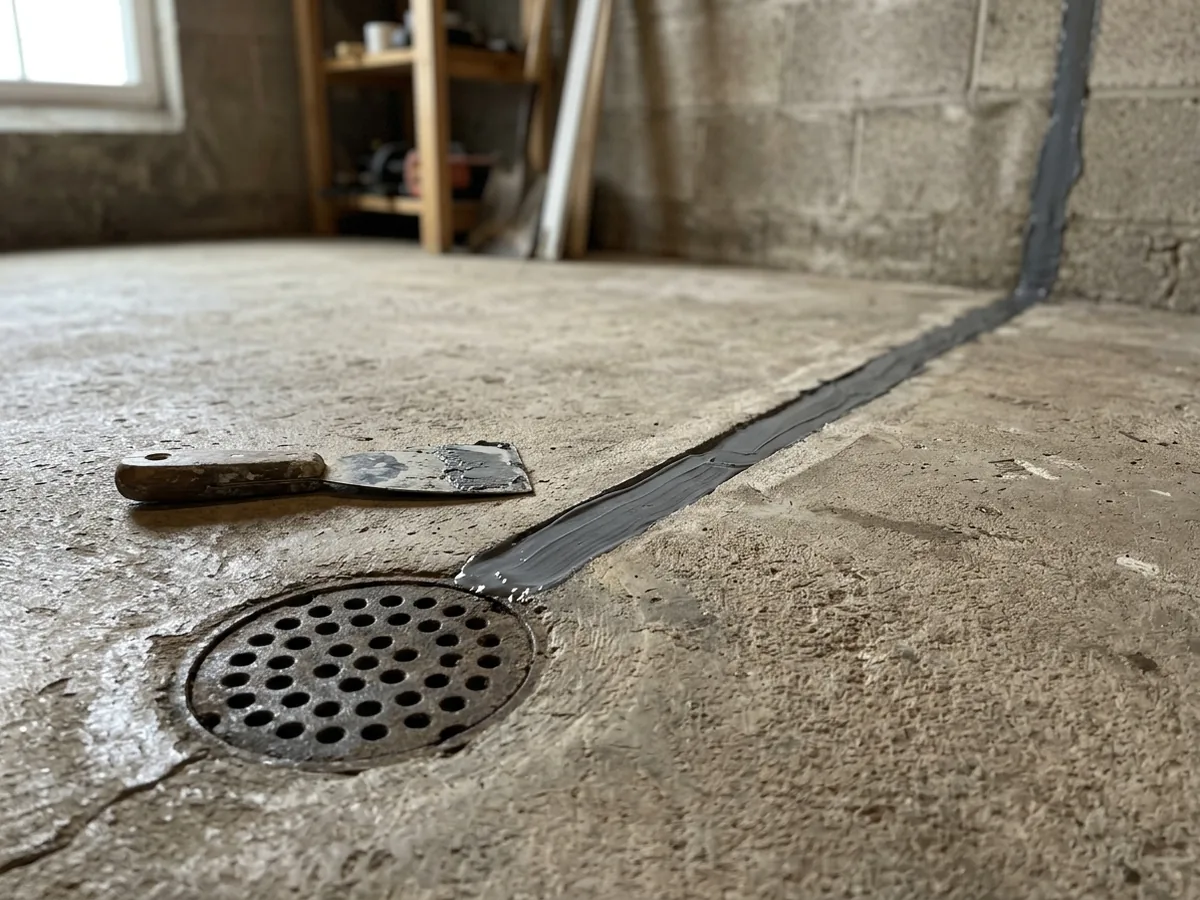
Basement Floor Crack Repair
Most basement slabs crack as they cure and shrink, often in a line from a corner or from the floor drain. If the two sides are flush and the crack isn't growing, the repair is cosmetic: the crack is routed out to a clean groove and filled with a flexible polyurethane sealant or an epoxy filler. HomeGuide's March 2026 figure for sealing a minor slab crack is $250 to $800 per crack.
A crack that has opened wider or stepped, with one side higher, has moved. If it has since stopped moving, it can be stitched: slots are cut across the crack and steel staples or carbon fiber are set in epoxy so the two halves can't separate further. HomeGuide puts stitching at $500 to $2,000 per crack. If it's still moving, find out why first (the sections below).
Floor cracks are also one of the ways radon gets in; sealing them alone rarely brings levels down (the details are on foundation crack repair).
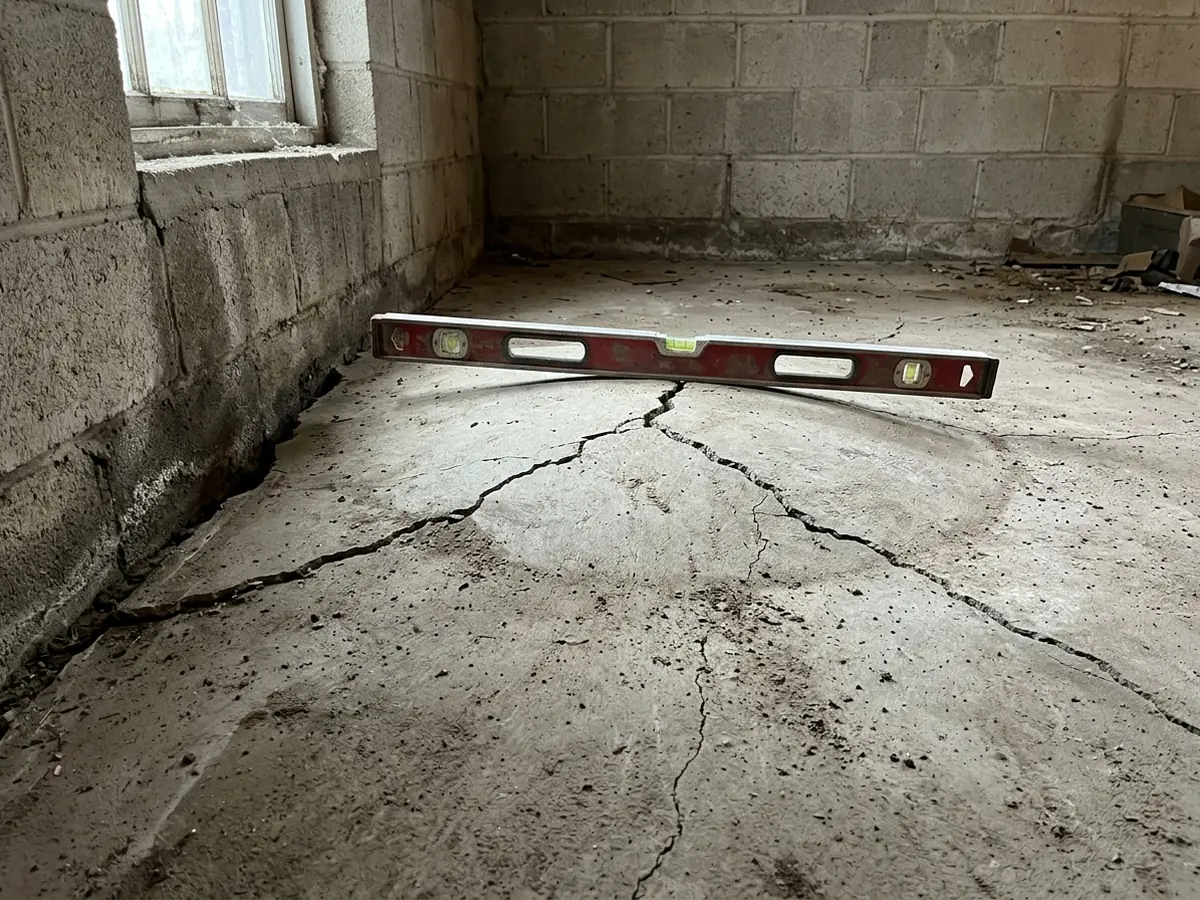
Heaved or Lifted Basement Slab
A slab that domes up in the middle, with cracks radiating out from the high point, is being pushed from below. The usual causes are water pressure under a floor with no drain tile and clay that swells when it gets wet (Ann Arbor's clay soils are described on the homepage). Lifting equipment can't push a floor down, so the fix has two parts.
- Relieve the water. Interior drain tile and a sump, laid in a trench beside the footing, are covered on basement leak repair. Without this, new concrete heaves again.
- Re-pour the heaved area. The raised section is broken out, the wet clay below it dug out and replaced with compacted stone, and the floor poured again to code (see the last section).
Our view: if the floor only rises in spring, get a written opinion on the drainage before paying for concrete.
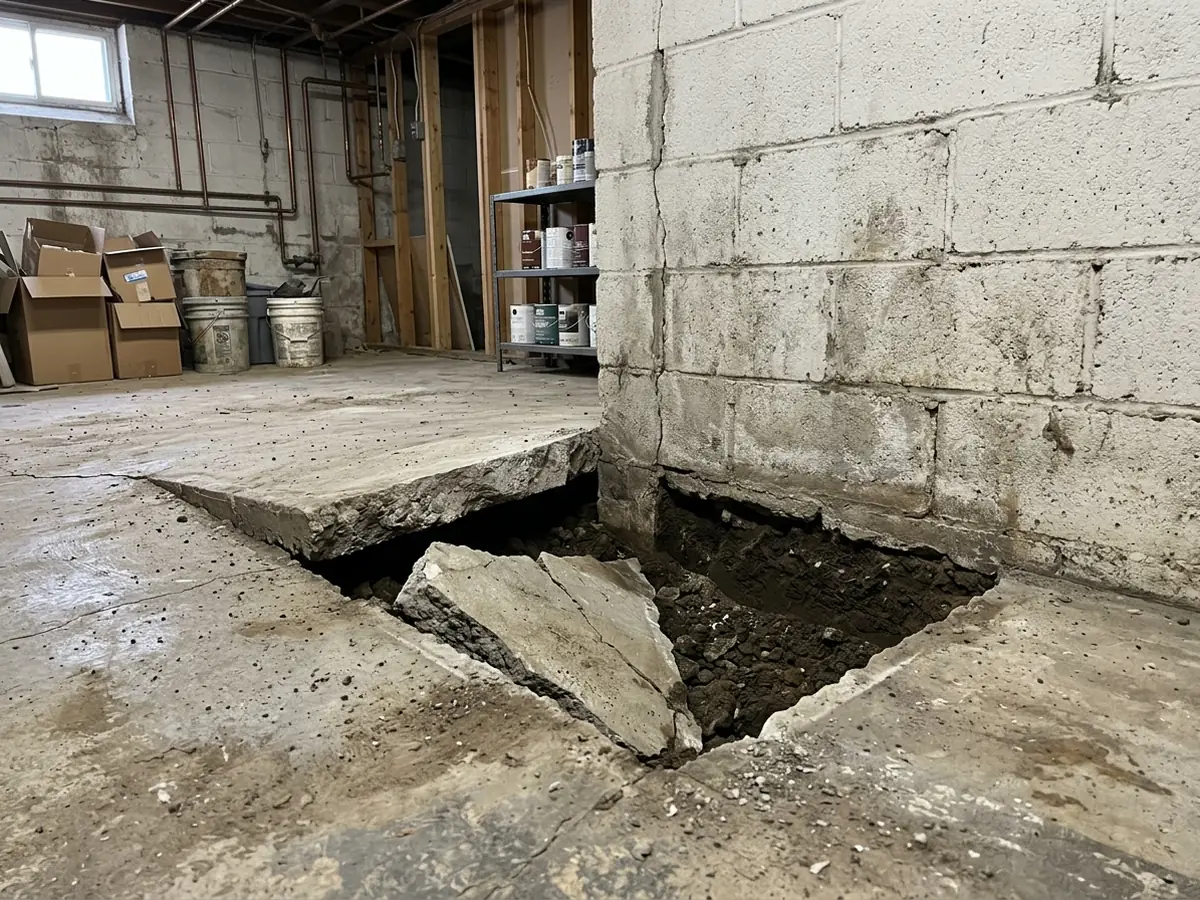
Sunken Slab Sections and Voids
A section that has dropped, or a floor that sounds hollow, has lost the soil under it. Fill that was never compacted, a cracked clay drain line washing soil away, or water running under the slab toward a sump can all leave a void. The sinking section often pulls away from the wall and cracks at a corner.
Before anything is lifted, a camera should go down the floor drain and the main drain. If a broken pipe under the slab is washing out the fill, the plumber fixes it first, or the void comes back. Small sunken sections can then be raised by injecting foam or grout under them; the two methods are compared on concrete lifting and leveling. A section that is badly broken as well as sunken may be better replaced than lifted.
Slab Replacement and Re-pour
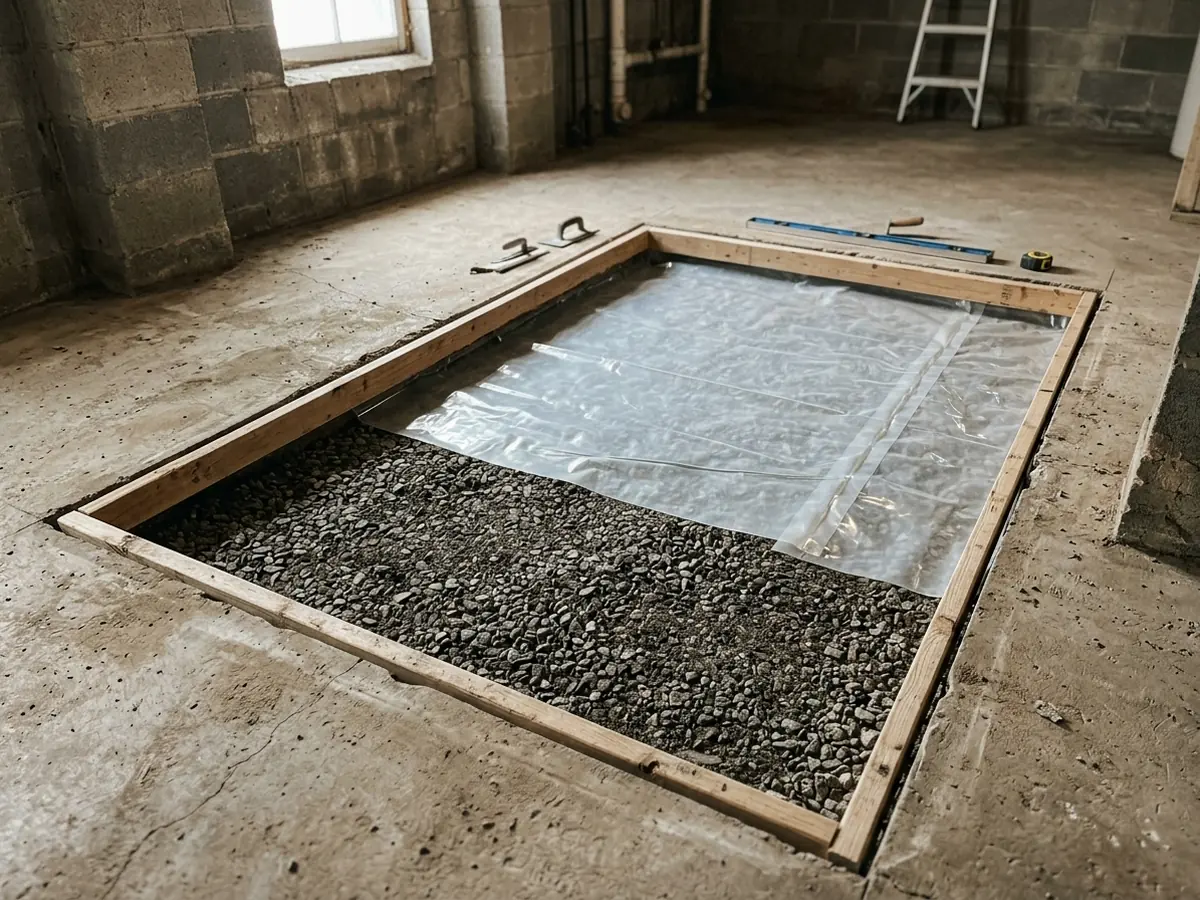
When a section is too broken, heaved or hollow to save, it's cut out with a saw, broken up and carried out by hand. The new floor has to meet the Michigan code for a concrete slab on the ground:
- At least 3 1/2 inches thick.
- A 4-inch base of clean graded sand, gravel or crushed stone under a below-grade slab, unless the soil is a well-drained sand-gravel type.
- A 6-mil polyethylene vapor retarder between the base and the concrete, with joints lapped at least 6 inches.
A re-pour is also the cheapest moment to add things that belong under a floor: interior drain tile, a sump basin, or the pipe a radon mitigation system needs (that system is another trade's work). HomeGuide's March 2026 range for partial slab replacement is $5,000 to $15,000 or more. Those figures are written for slab-foundation houses, so get a quote on your own floor.
Why Ann Arbor homeowners call Ann Arbor Foundation Pros
- The estimate is free, and you can ask for it in writing
- Your request goes to one foundation contractor, not five
- Method, pier or brace count and price on paper before work starts
- The referral costs homeowners nothing
Is a Cracked Basement Floor a Structural Problem?
Usually not. A basement slab poured inside the walls holds up very little, so a flat, stable crack is a moisture and radon question, not a structural one. The exceptions are a floor that keeps rising or sinking, a crack with one side higher than the other, and a crack under a column or bearing wall that stands on the slab.
That last one deserves a look. Old basement posts and lally columns were often set straight on the floor, and a slab crack around a post base can mean the post is punching through. That's a framing repair, with a new footing pad under the column; sagging floor repair covers it. A crack that runs from the floor up into the wall belongs to the wall, not the floor; start with foundation inspection.
What the Written Estimate Should Spell Out
- The cause the contractor found, and how they found it (tap test, level readings, drain camera).
- Square footage being cut out, the slab thickness going back, and the base and vapor retarder under it.
- Whether drainage work is in this quote or is someone else's.
- How the new section ties to the old floor and the wall, and how long before you can put weight on it.
For the garage slab instead, see garage floor repair.