
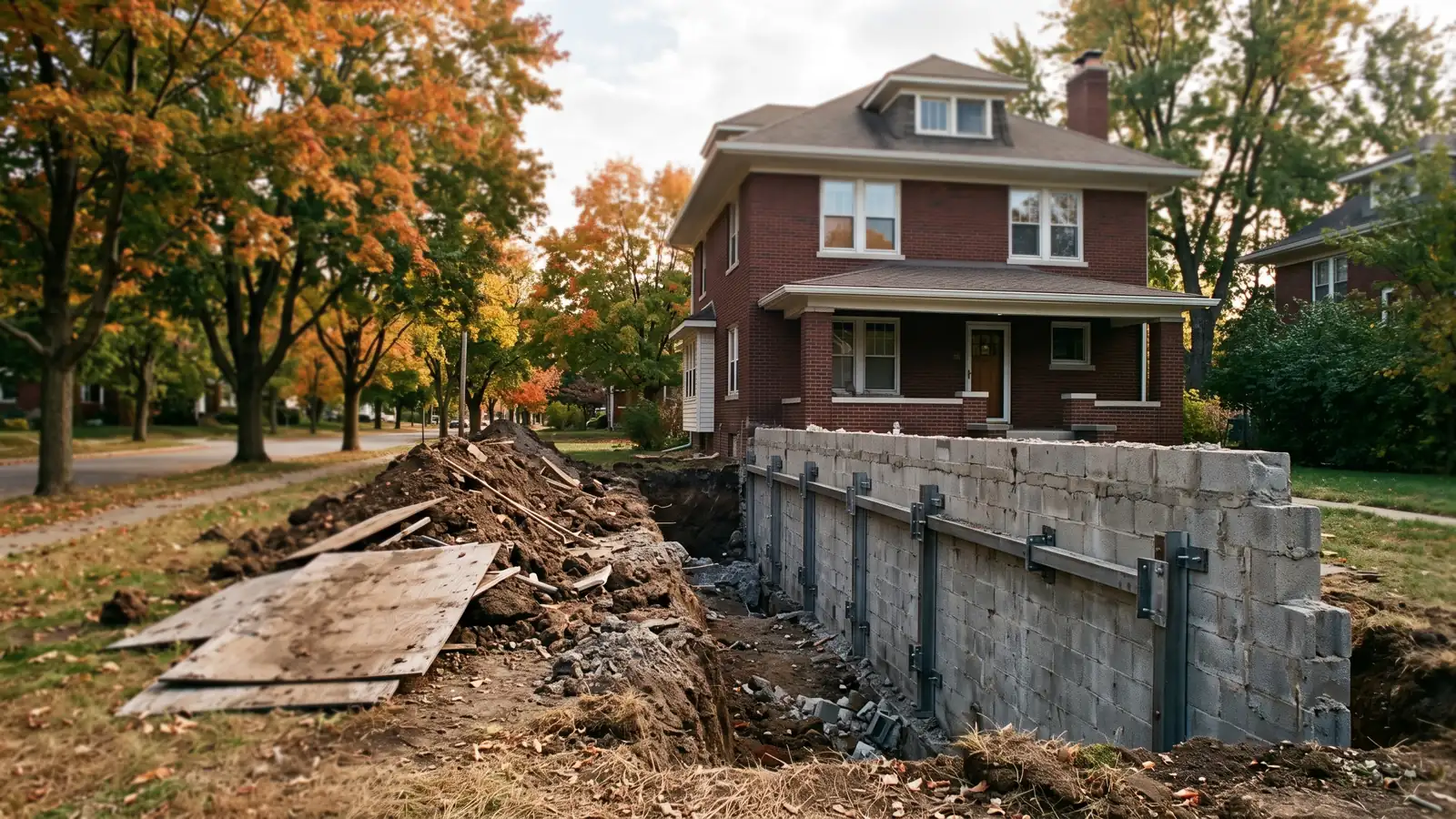
Carbon Fiber Wall Reinforcement by Wall Type and Damage
Carbon fiber is a tension material. Glued to the inside face of a wall that soil is pushing inward, it takes the pull the wall can't take on its own. How well that works depends on what the wall is made of and how far it has already moved.
Carbon Fiber Straps on Block Walls
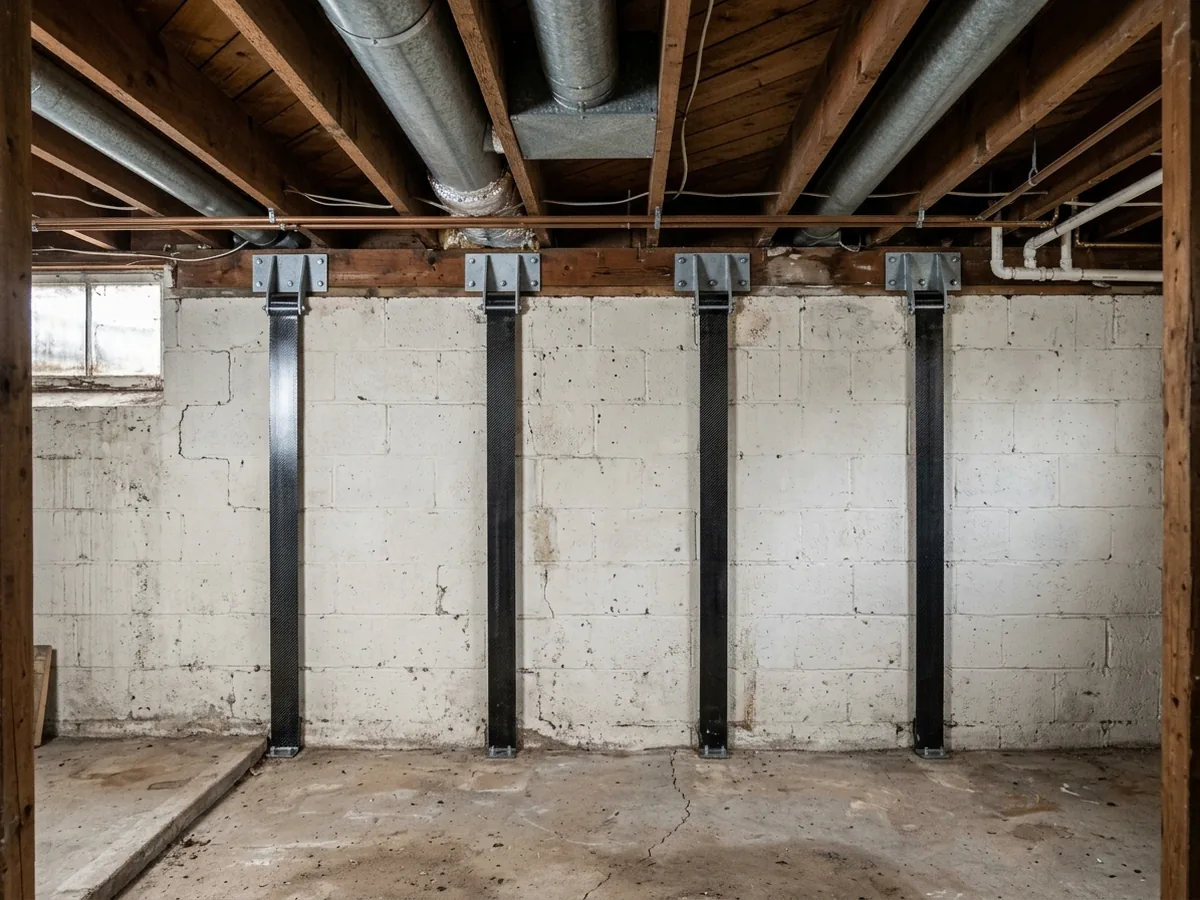
Block walls are where straps get used most, because hollow block bends along a horizontal mortar joint when wet clay pushes on it (the bowing wall page explains that crack). Straps run from the floor to the sill, spaced about every 4 feet in HomeGuide's description of the method (October 2025), and each one is fixed at the top to the joists or rim with a steel bracket so the load has somewhere to go.
Surface preparation decides whether the strap works. One ICC-ES evaluation report for carbon fiber on unreinforced masonry walls requires the bond to a properly prepared surface to exceed the tensile strength of the masonry itself, so a failed test breaks the block before the glue lets go. The same report lists a design tensile strength of 129 ksi for one carbon fabric. In practice that means grinding off paint, efflorescence and loose parging before the epoxy goes on. A strap glued over flaking paint is only as strong as the paint.
Straps on Poured Concrete Walls
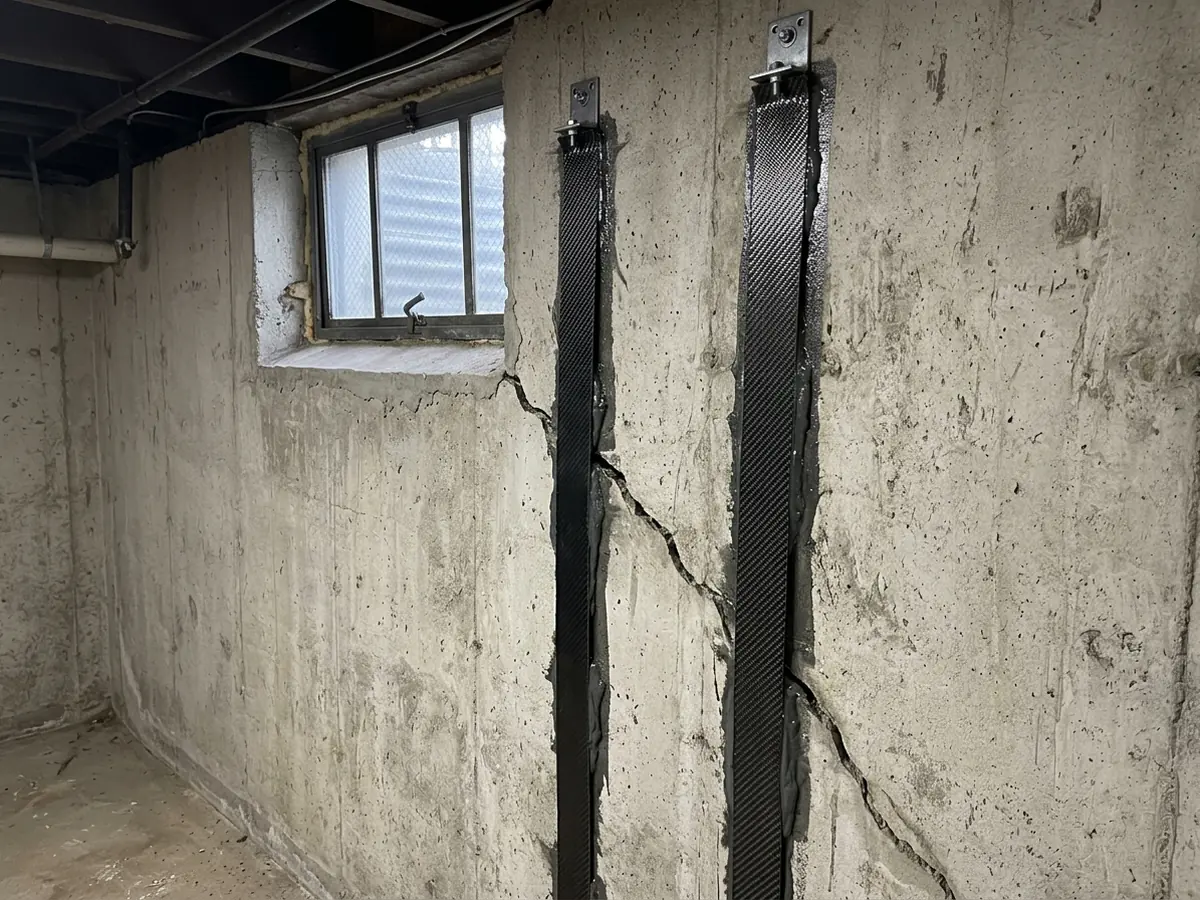
Poured walls can crack and lean inward too, and settlement cracks in them tend to run diagonally from corners and window openings. HomeGuide notes that poured foundations "handle reinforcement methods well" and lists carbon fiber straps among the options alongside anchors and injection.
On a poured wall the straps cross the crack and tie the top of the wall to the framing. If the crack also leaks, it gets injected first: the straps hold the wall, the injection seals it. That second job is on the foundation crack repair page.
Carbon Fiber Crack Stitches
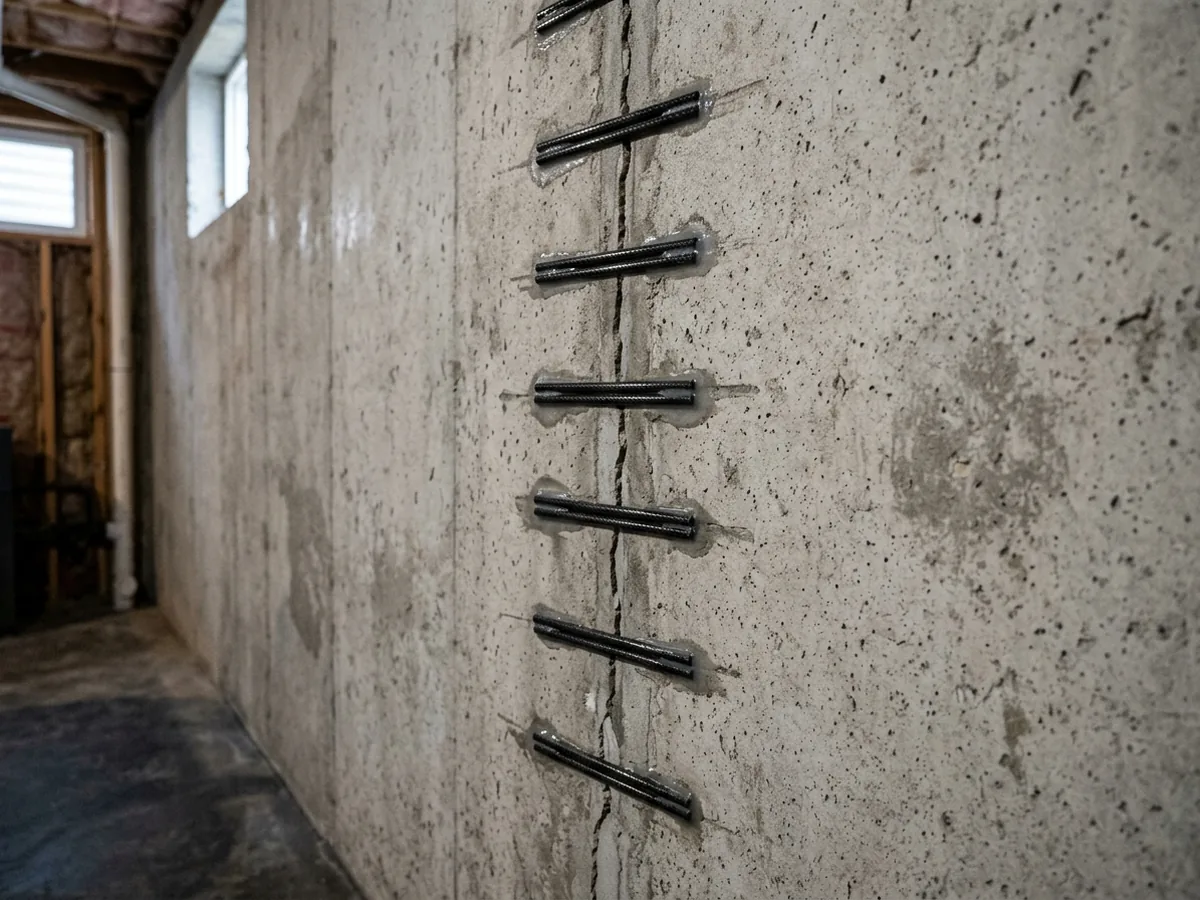
A stitch is a short piece of carbon set across a single crack in a slot cut into the concrete and filled with epoxy, at intervals along the crack's length. It stops the crack faces from pulling apart. It doesn't reinforce the whole wall the way a floor-to-sill strap does. HomeGuide groups "epoxy or crack stitching" at $250 to $800 per crack (February 2026).
Our view: stitches suit a poured wall with one or two settlement cracks and no inward lean. If the wall is bowing, stitching the crack treats the symptom and leaves the cause.
When a Wall Has Moved Too Far for Straps
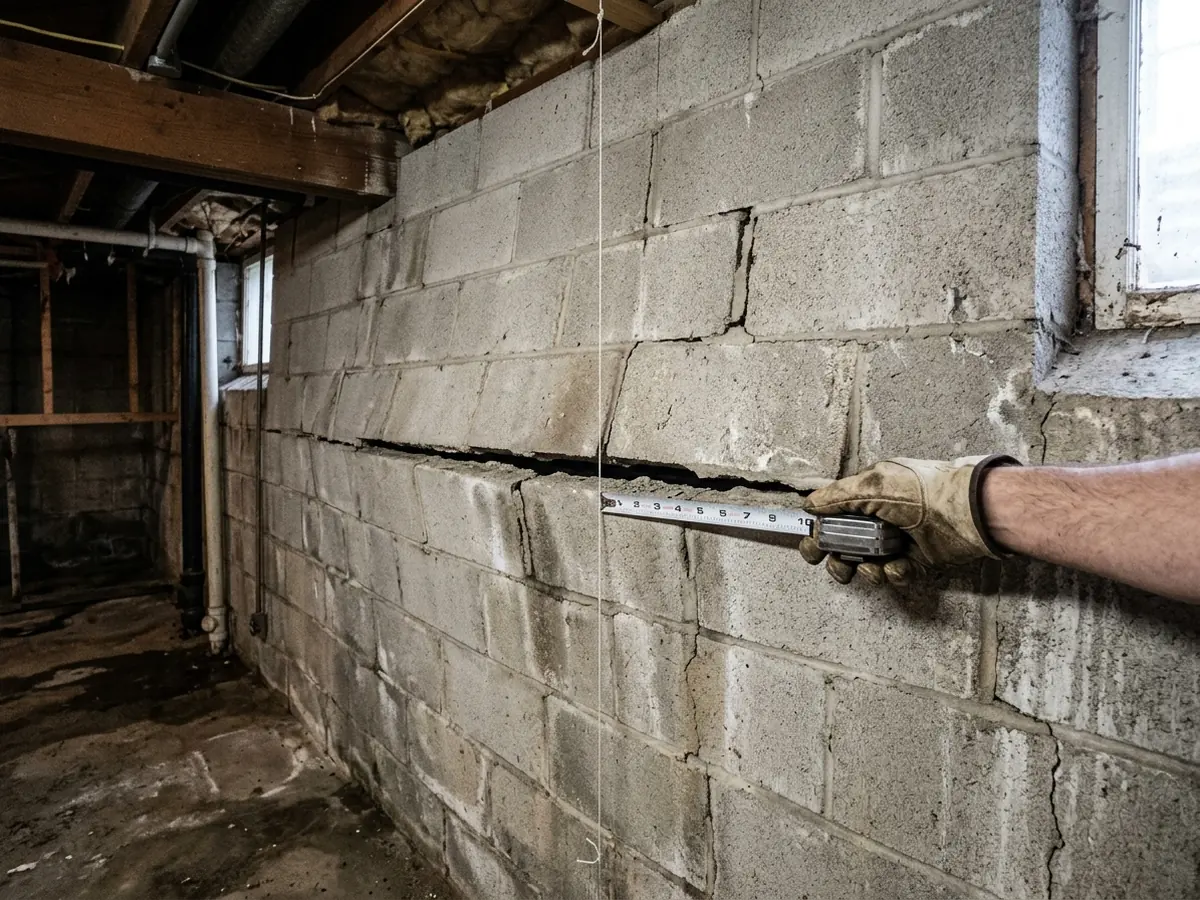
Straps hold a wall where it is. They can't push it back. Contractor guidance commonly puts the cutoff at 2 inches of inward bow: under that, straps; 2 to 4 inches, steel beams or wall anchors; more than 4 inches, rebuilding the wall. A wall that has slid inward at the bottom course, over the footing, is also outside what straps can fix.
If a measurement is anywhere near those lines, or the crack is still widening, have a structural engineer look before choosing a method (see foundation inspection). Past the limit, the options are braces, anchors or basement wall replacement.
Why Ann Arbor homeowners call Ann Arbor Foundation Pros
- The estimate is free, and you can ask for it in writing
- Your request goes to one foundation contractor, not five
- Method, pier or brace count and price on paper before work starts
- The referral costs homeowners nothing
How Much Do Carbon Fiber Straps Cost?
National figures only; we found no published Ann Arbor prices. HomeGuide's July 2025 crack-repair guide puts carbon fiber at $900 to $2,000 or more per crack. Its October 2025 bowing-wall guide prices steel or carbon fiber straps at $85 to $280 per linear foot of wall, or about $1,700 to $5,600 for a 20-foot wall.
What moves the number:
Wall length and height
More straps, more material.Surface condition
Painted, parged or efflorescent walls take longer to prepare.Access
Finished drywall, shelving or ductwork along the wall has to come out first.Paperwork
The City of Ann Arbor wants signed and sealed drawings for basement wall reinforcement; that rule is covered on the bowing wall repair page.
Ask for the strap count, spacing, the top-anchor detail and the surface preparation to be written into the estimate, so two quotes can be compared line by line.
One more question worth asking: which carbon system is it, and does it have an ICC-ES evaluation report? The report quoted above requires installers trained by the maker to follow its installation manual, and a copy of that manual to go to the code official for each project. A contractor using an evaluated system can show you the report number. We'd treat an unnamed "carbon kit" with more caution.
Straps or Steel Beams for a Basement You Plan to Finish?
If the wall qualifies for straps, they're the easier fit for a finished basement. They sit almost flush with the block, so framing and drywall go right over them. Steel I-beam braces stand off the wall and, in the same contractor guidance, take up roughly 6 inches of floor space and are hard to hide. Beams win when the wall has moved past the strap limit, or when it may need to be pulled back over time.
See also block foundation repair and bowing basement wall repair.