
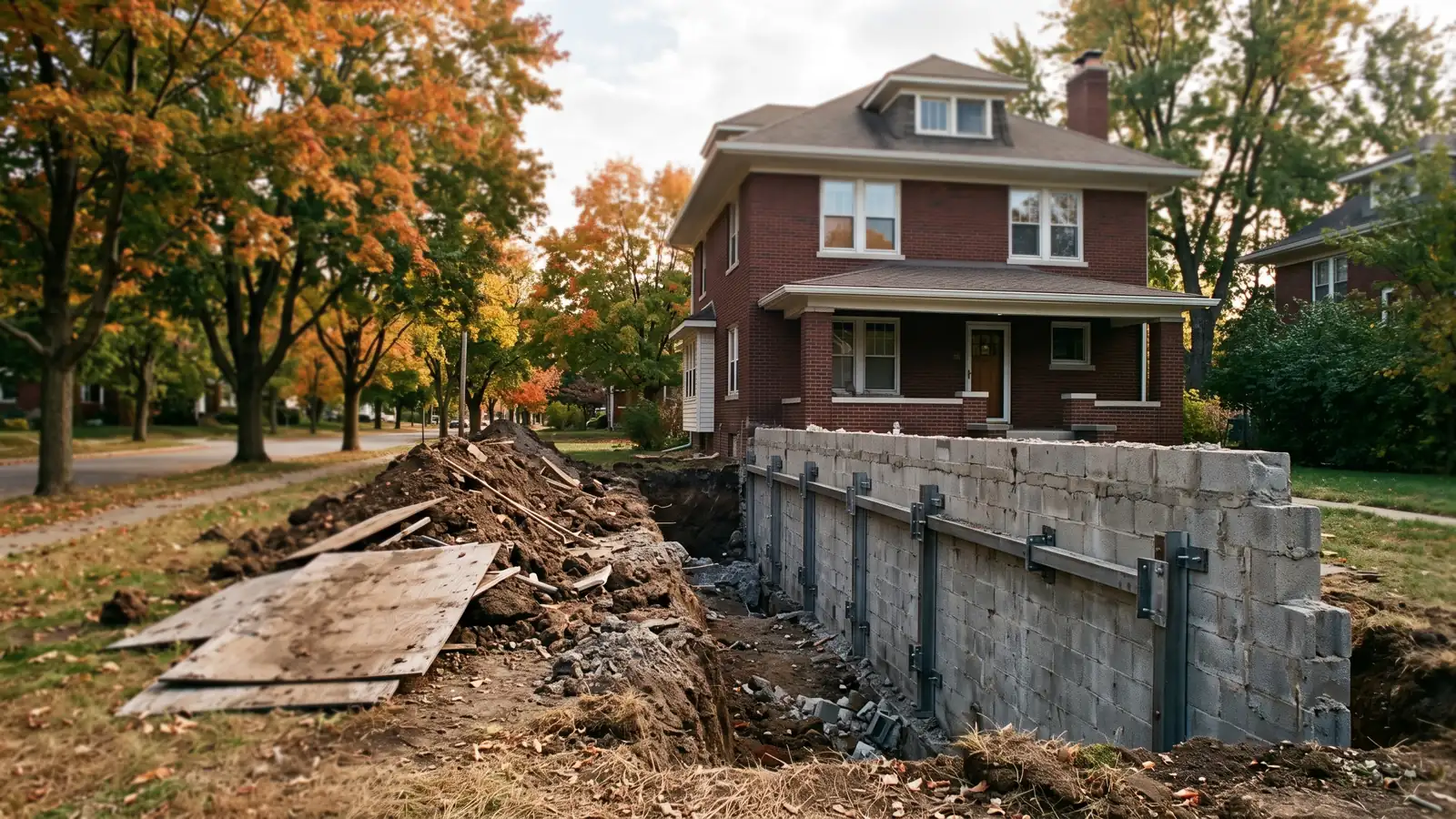
Foundation Inspections, Engineer Reports and Crack Monitoring
There are three kinds of people who look at foundations, and they answer different questions. A contractor tells you what they would do and what it costs. A home inspector tells a buyer what's visible on the day. A structural engineer tells you what's happening to the structure and what has to be done about it, and signs for it.
Contractor Assessment (Free Estimate Visit)
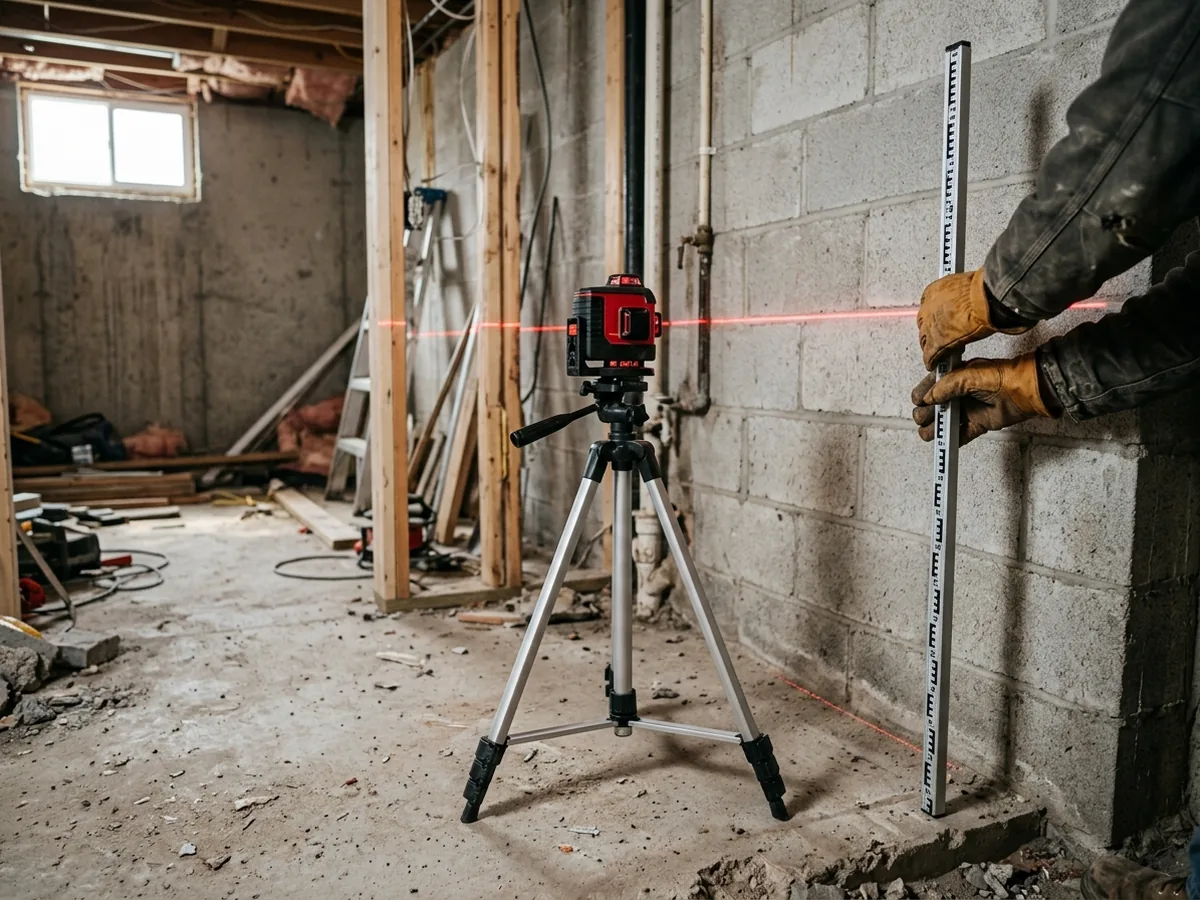
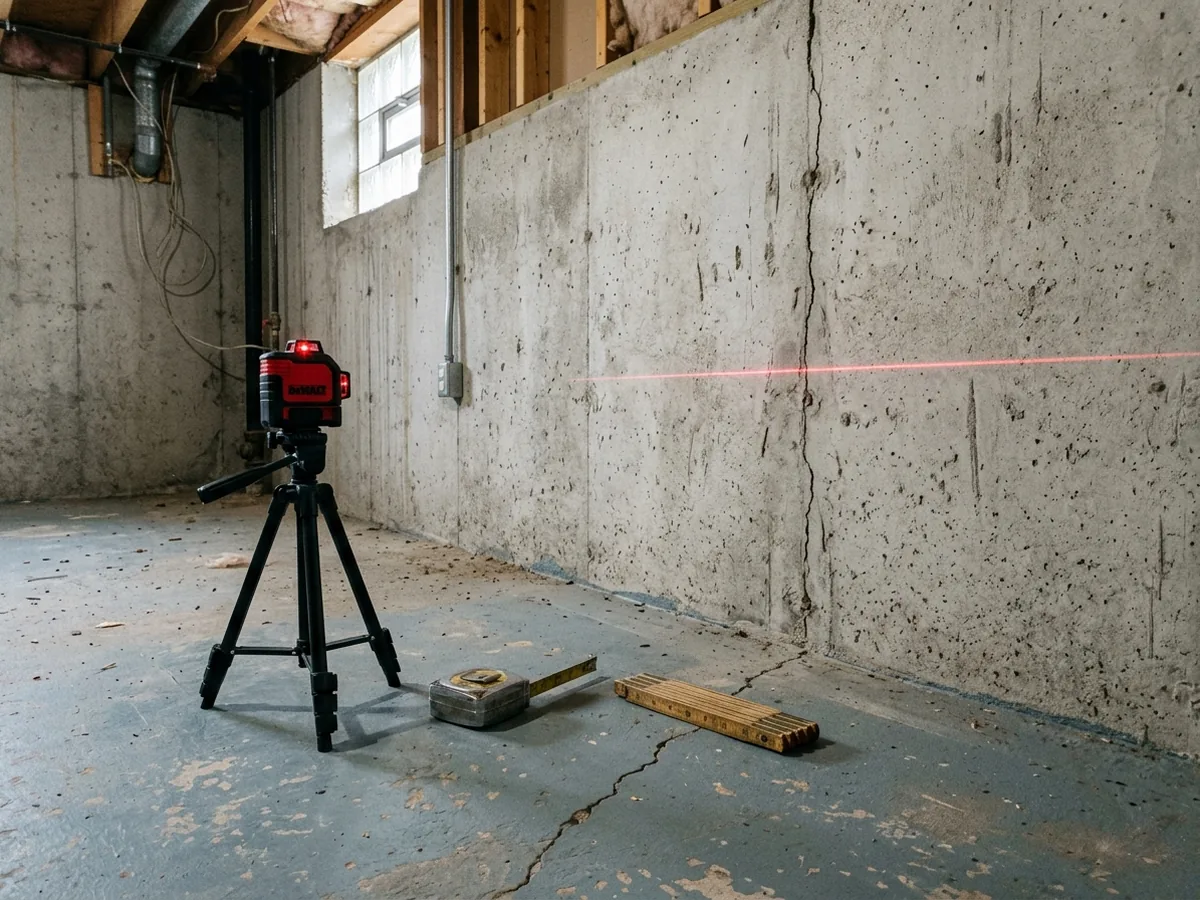
This is the visit we set up. A good contractor will measure rather than eyeball: crack widths with a gauge, the wall's lean against a level or string line, and a floor-elevation survey with a laser level, readings taken across each room so the high and low points show up as numbers. Outside, they'll look at the grade, gutters, downspouts and any trees or additions close to the wall.
What you get is a repair proposal with a price. Our view: treat it as one, not as a neutral opinion. It's the right first step when the problem looks routine, a single leaking crack or a sunken stoop, and the contractor's measurements are worth keeping either way. Ask for them in writing with the estimate.
Structural Engineer Report and Sealed Letter
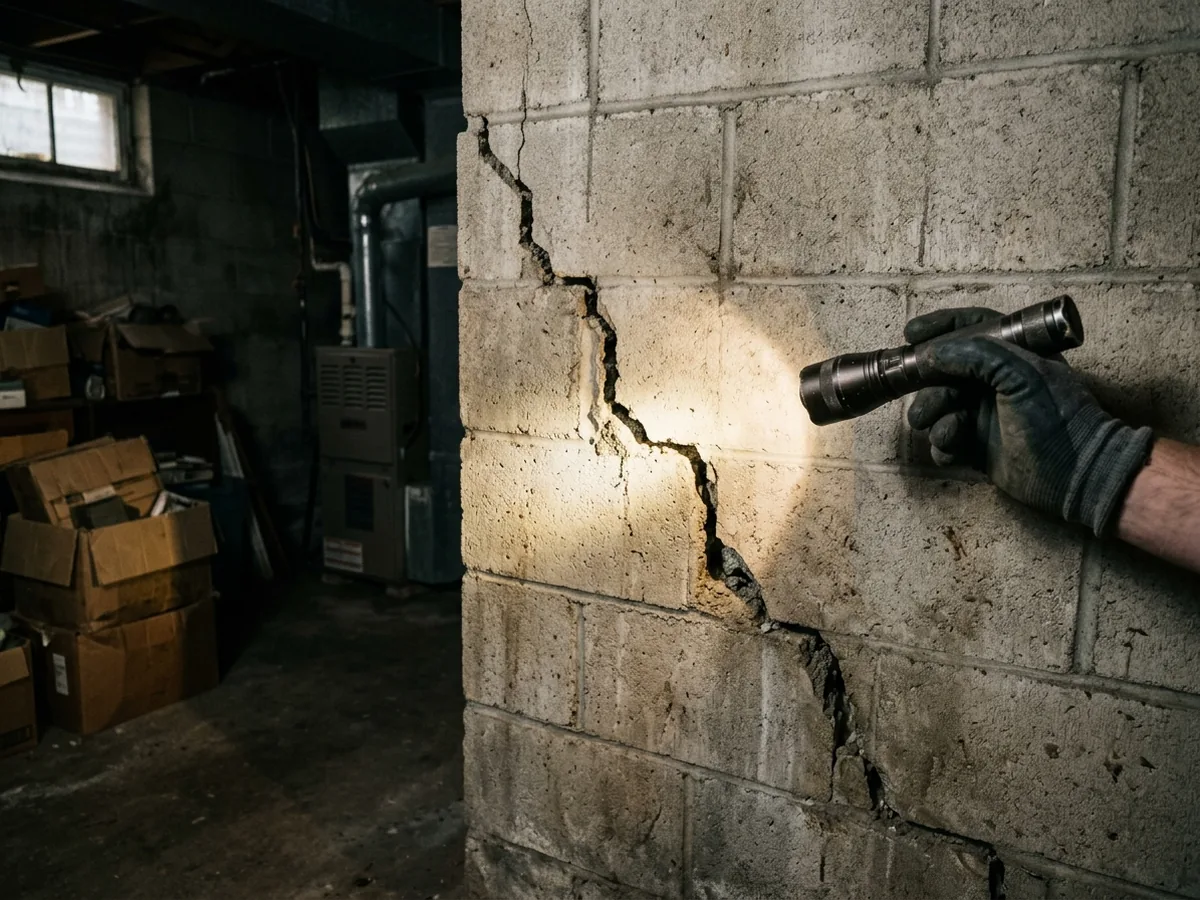
An engineer works for you, not for whoever sells the repair. When to bring one in: HomeAdvisor says cracks wider than 1/8 inch are cause for concern and probably mean a structural problem worth a structural engineer's look. Inspection guides commonly add cracks wider than 1/4 inch, horizontal cracks in basement walls, and stair-step cracks in masonry to that list. Any wall that has moved enough to need braces belongs here too, since bracing a basement wall in this city takes an engineer's stamped drawings (see bowing basement wall repair).
National prices for the report: HomeAdvisor gives $340 to $780 (June 2026) and HomeGuide $300 to $750 for a structural engineer's foundation inspection (December 2025). The output is a letter or report with the engineer's seal describing the cause, the required repair and, often, the details a contractor must build to. Our view: get it before you collect quotes, so every contractor bids the same scope.
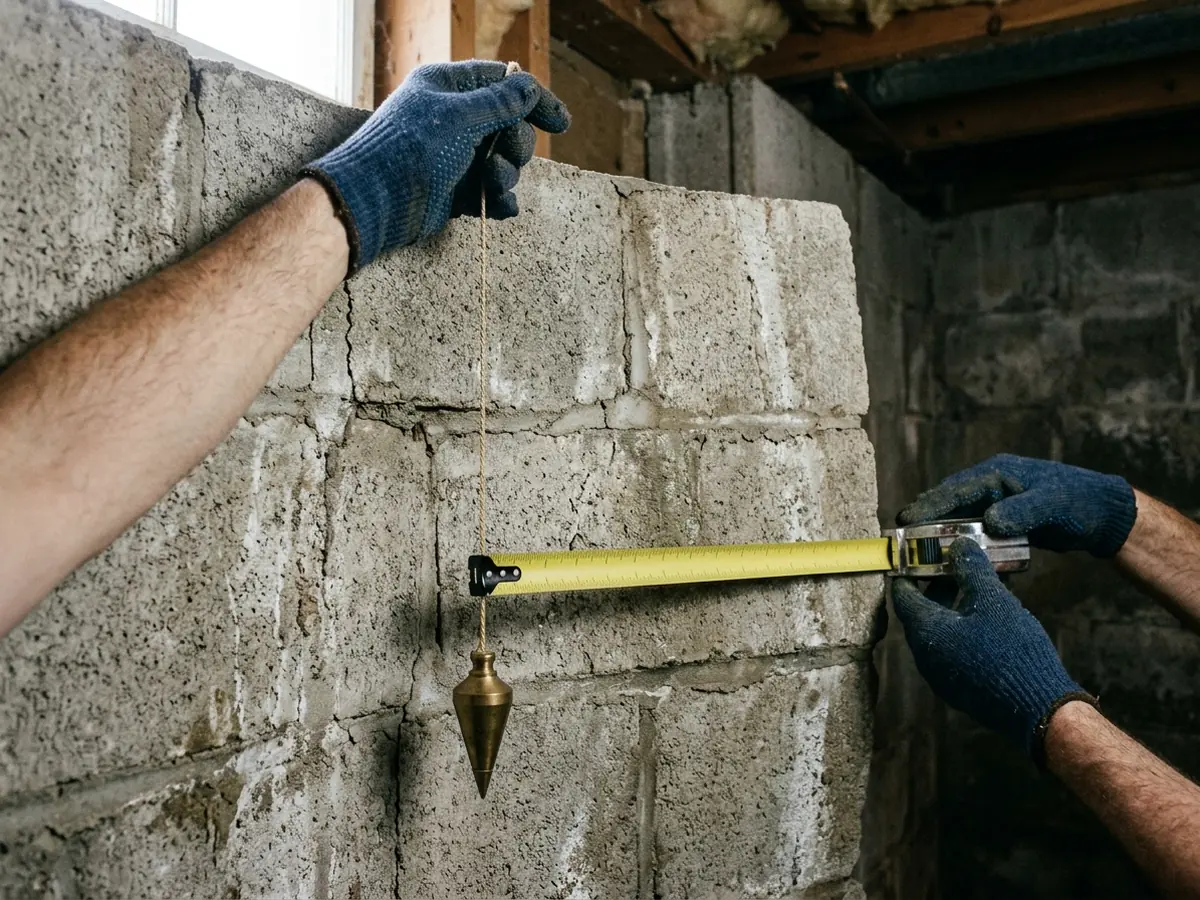
A useful report names the cause it found, records the measurements it was based on (crack widths, inches out of plumb, floor elevations), states the repair required and where, and says whether anything should be monitored afterward. A report that only says "repair as needed" leaves the scope back with the contractor.
Pre-Purchase Foundation Inspection
A buyer's general home inspection includes the foundation, but only what can be seen. HomeGuide puts a standard home inspection at $200 to $500 nationally and $250 to $600 in Michigan (October 2024). Michigan doesn't license home inspectors at all, so credentials vary widely; ask what training and certification the inspector has.
If the general inspection flags a crack, a bow or a sloping floor, a buyer has two follow-ups: a contractor's assessment for a price to negotiate with, or an engineer's report to learn whether it's serious. Our view: within a short inspection window, the engineer is the better use of the days. The seller's side of this, the Michigan disclosure form, is covered on the homepage.
Crack Monitoring Over a Season
A crack's width says less than whether it's still moving. How to read a crack's width and shape is on the foundation crack repair page; an old crack that has stopped moving is common in Ann Arbor's older neighborhoods.
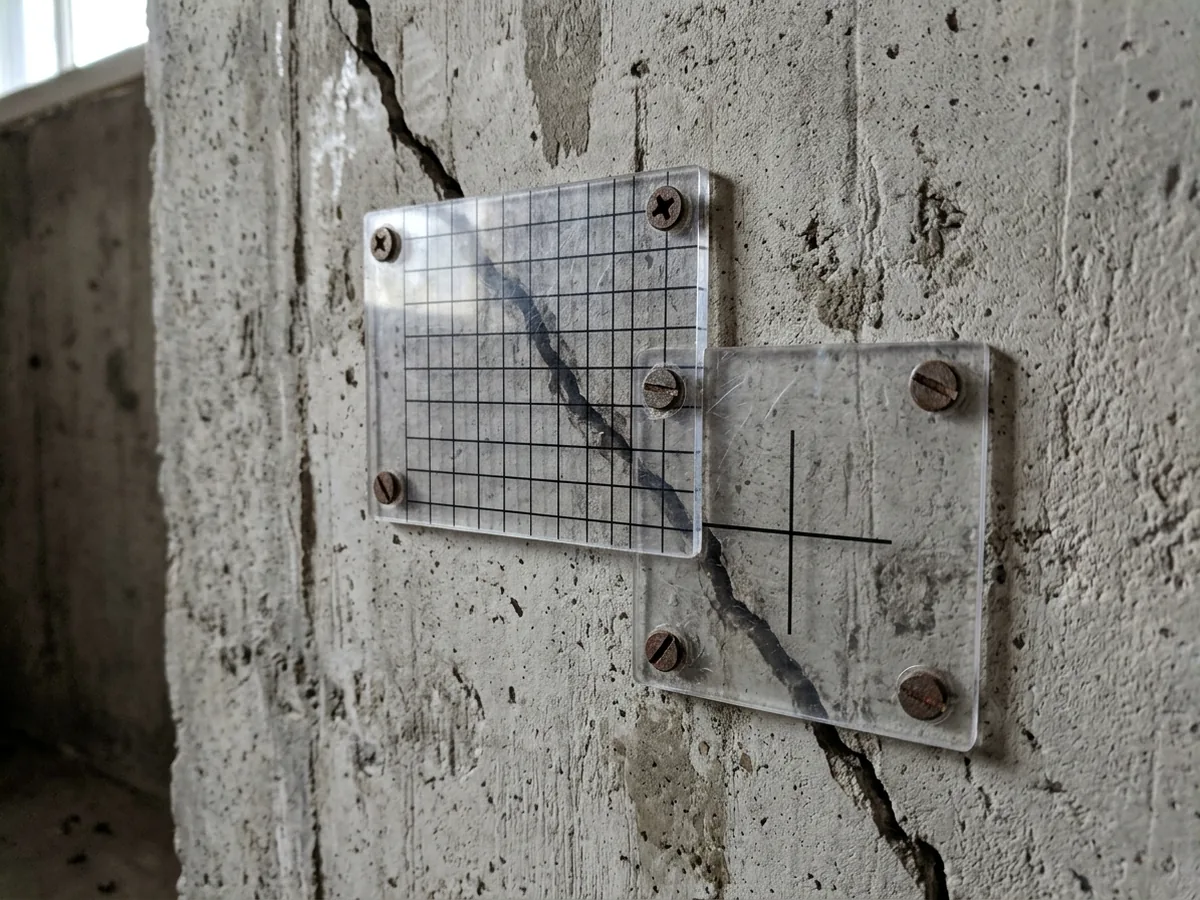
Monitoring answers the question. A crack monitor, two overlapping plates with a grid, is fixed across the crack and read every few weeks; a dated pencil mark at each end of the crack plus a photo with a ruler does a rougher version. Our view: run it through at least one winter and one spring thaw, since that's when clay soil swells and shrinks. A crack that hasn't moved gets sealed. One that has gets an engineer. How to read the crack's shape is on the foundation crack repair page.
Why Ann Arbor homeowners call Ann Arbor Foundation Pros
- The estimate is free, and you can ask for it in writing
- Your request goes to one foundation contractor, not five
- Method, pier or brace count and price on paper before work starts
- The referral costs homeowners nothing
How Do You Check a Foundation Contractor's Licence in Michigan?
Michigan licenses two kinds of residential contractor: residential builders and maintenance and alteration contractors. An M&A licence lists the specific trades the holder may practise, such as concrete, masonry, excavation or basement waterproofing, so check that the trade matches the job. Applicants complete 60 hours of prelicensure education before the exam, and a licence is generally needed for residential work of $600 or more. In Ann Arbor, the contractor's licence must also be registered in the city's STREAM system before they can pull a permit.
Ask for the licence number and the trades printed on it. A waterproofing-only licence on a wall-replacement quote is a mismatch.
Engineer or Contractor First?
Contractor first
one crack in a poured wall, a sunken step or slab, a single leak point.Engineer first
a horizontal crack, a wall out of plumb, a crack past the widths above, a house you're buying, or a job the city will want sealed drawings for.Both
anything structural. The engineer sets the scope; the contractor builds it.
Related pages: basement wall replacement, block foundation repair and carbon fiber straps.