
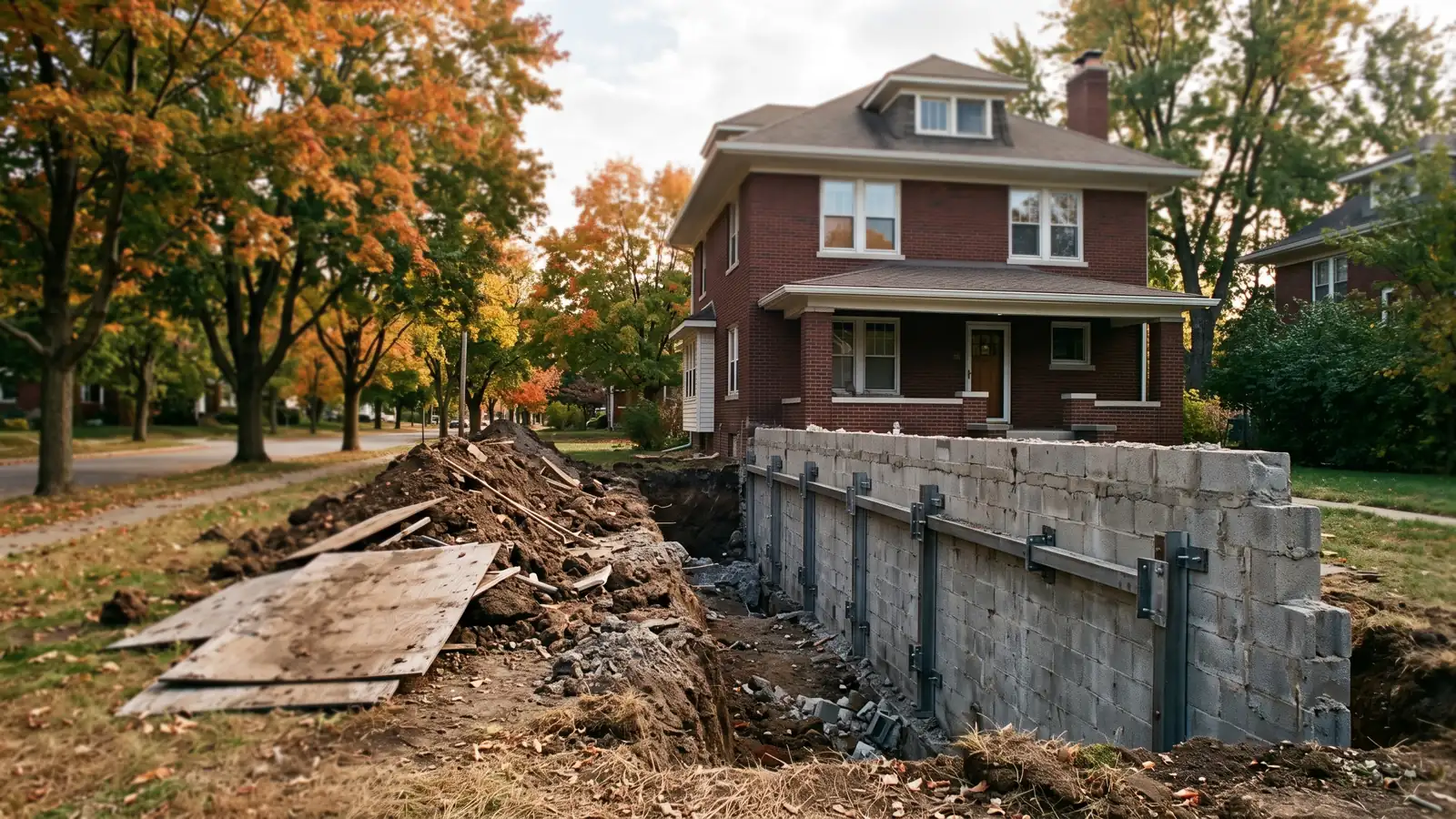
Foundation Crack Repair by Crack Type and Wall Material
Read the crack before choosing the repair. In poured walls, curing-shrinkage cracks are usually vertical and under 1/8 inch. Past that width, something other than curing is at work. A crack that tapers, wide at one end and hairline at the other, points to settlement, and it tends to sit at a corner or beside a window. Width alone doesn't date a crack. InterNACHI notes that a 1/2 inch crack in a new building may mean rapid settlement, while in a 50-year-old building it can be movement of 1/100 inch a year. A home inspection guide adds that settlement cracks adding up to less than 1/4 inch in total are probably not from settlement that is still going on.
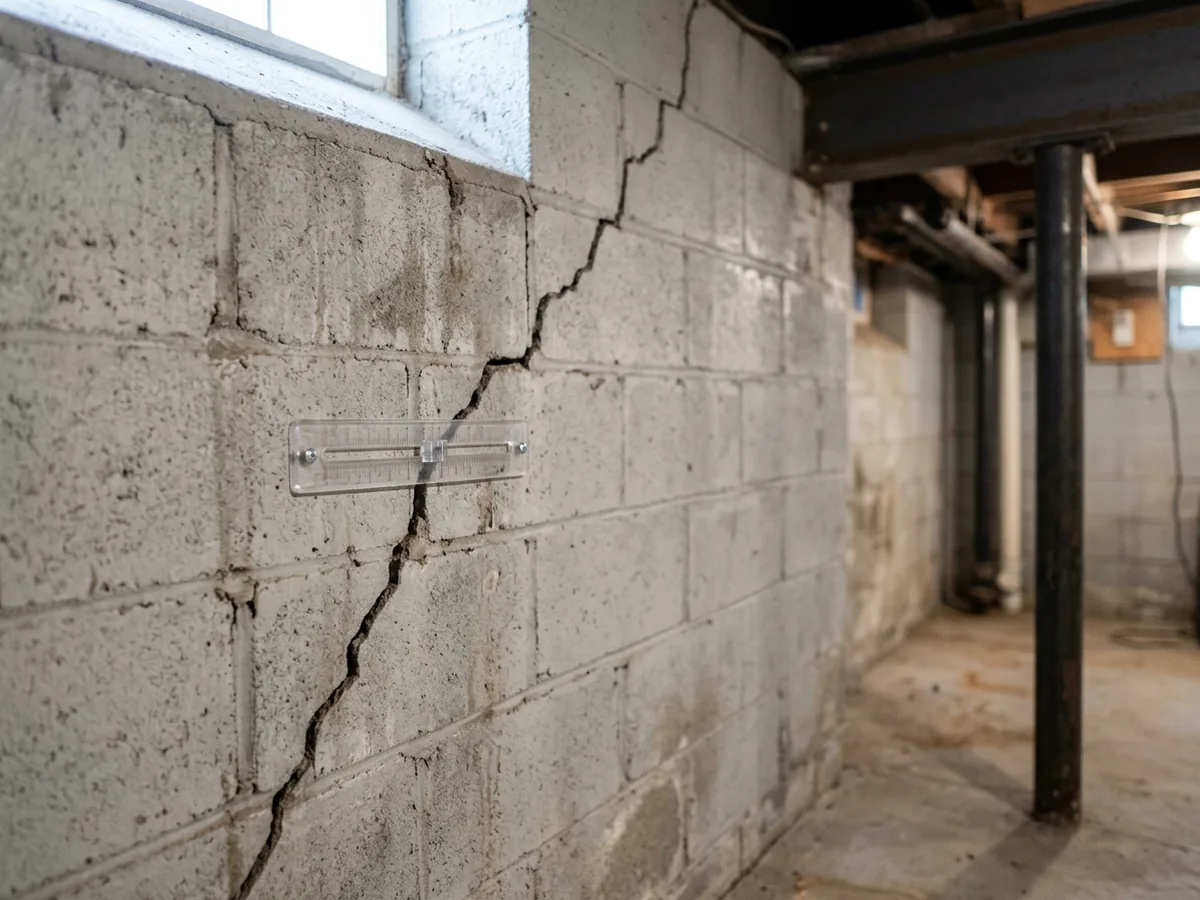
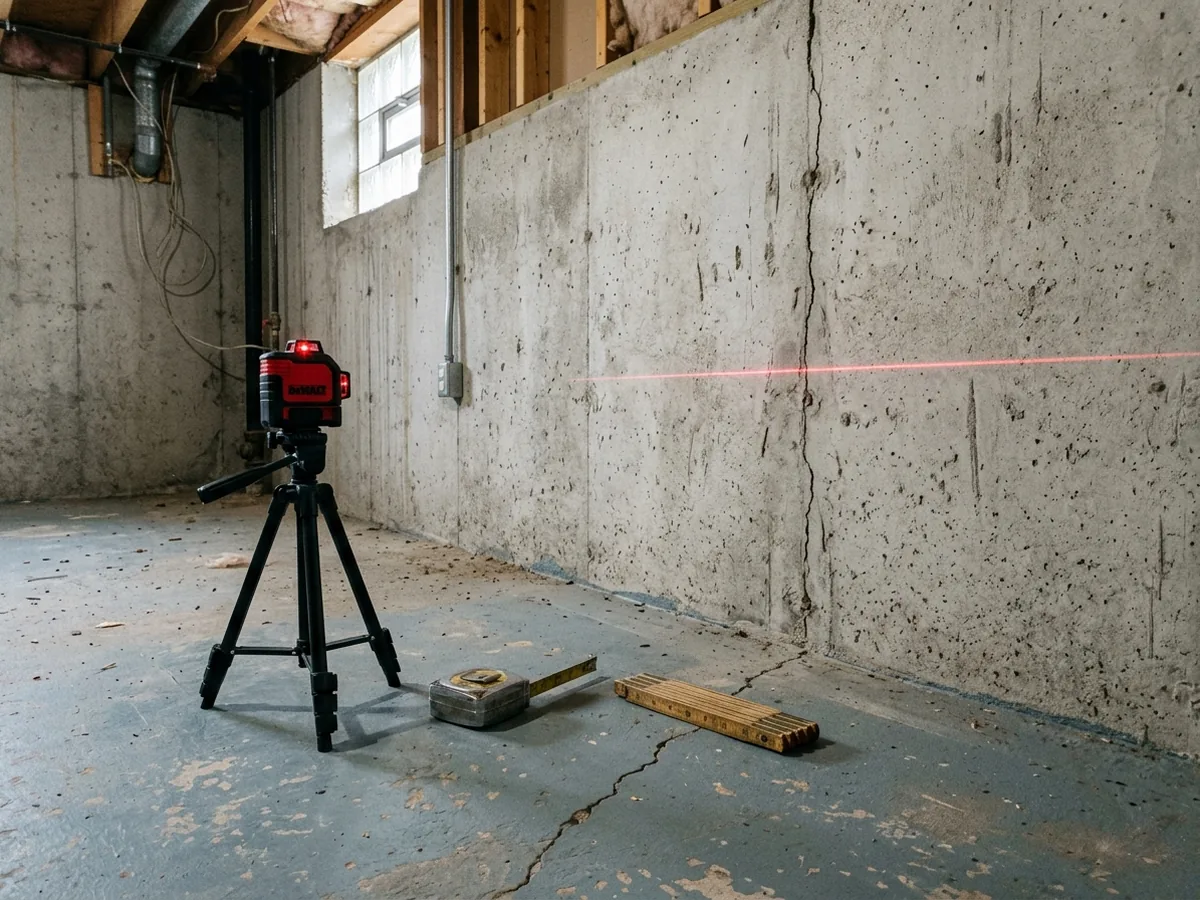
So the first step is often to watch it. HomeGuide suggests marking and dating both ends of a crack with a pencil, and a crack gauge across it gives a reading to compare through a freeze-thaw season. A crack that hasn't moved can be glued or sealed. One that keeps opening needs its cause fixed first.
Epoxy Injection for Structural Cracks
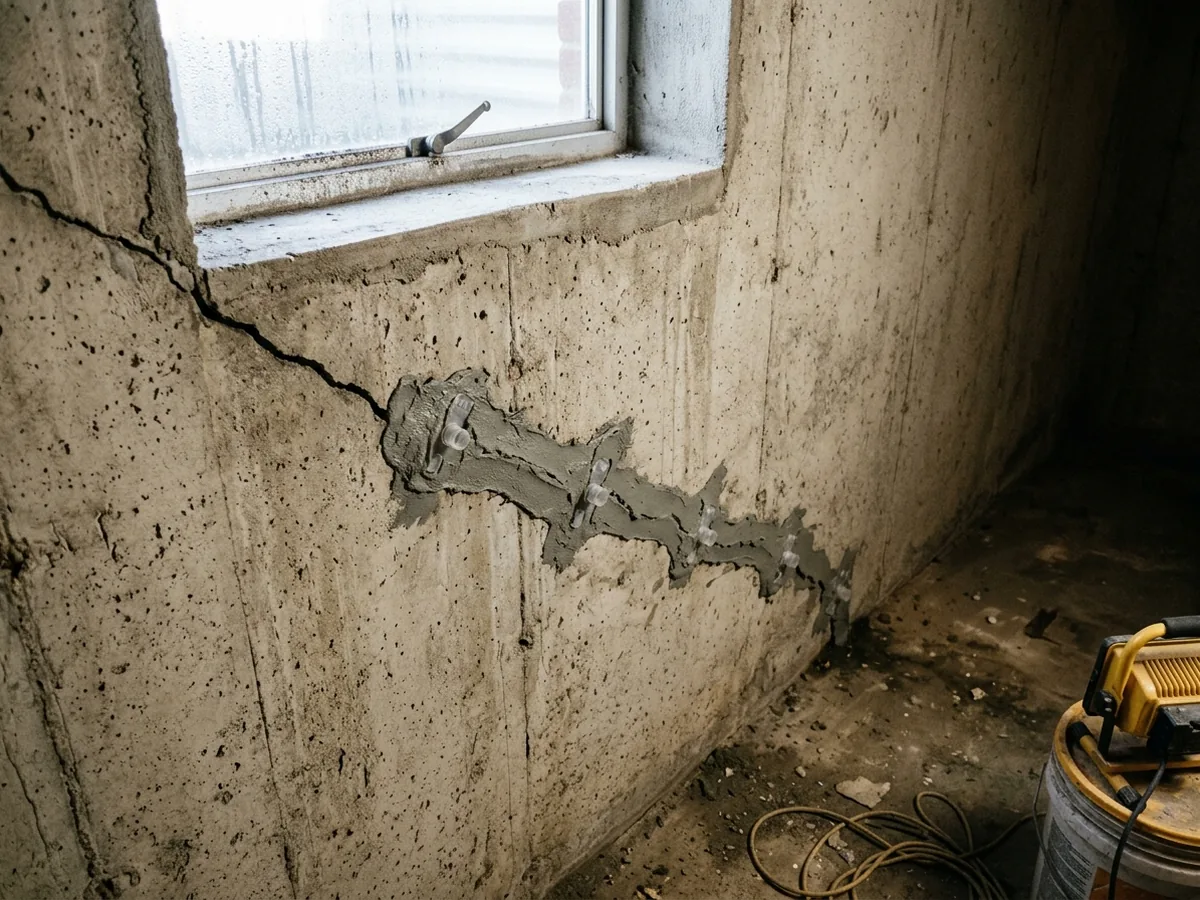
Injection starts the same way for both resins. Small plastic ports go along the crack, a band of epoxy paste seals the face between them, and once that cures, resin is pumped in port by port, working along the crack. Epoxy glues the faces of the crack to each other, and once cured it is harder than the concrete on either side. That makes it the structural repair of the two. The catch: it only works on a crack that's done moving. Inject epoxy into a wall that is still shifting and the concrete will simply crack again next to the repair.
Polyurethane Injection for Leaking Cracks
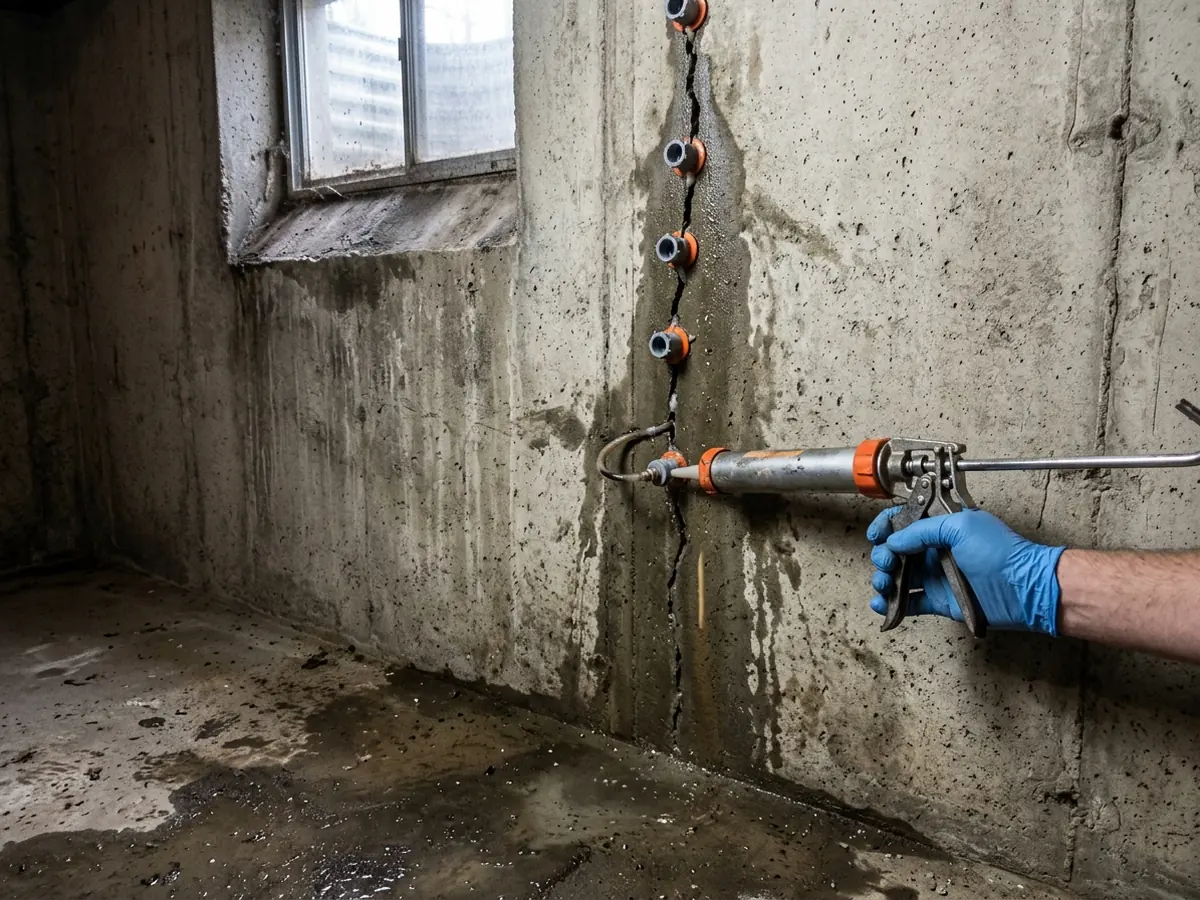
Polyurethane is the leak repair. It foams and expands as it's injected, filling the crack through the full wall thickness to the soil outside, and stays flexible after it cures. That suits a crack that opens and closes a little with the seasons. Either resin leaves a band of gray epoxy paste a few inches wide along the wall, with the stubs of the ports in it. You can frame a stud wall over it as it is, or have the paste chipped off once the resin has cured if the wall is going to be painted. A leak at the joint between wall and floor, at a tie-rod hole or around a pipe isn't a structural crack and has its own fixes (basement leak repair).
Stair-Step Cracks in Block Walls
In a block wall, cracks follow the mortar joints in a stair-step line, usually from a corner or an opening. HomeGuide reads them as a sign of settlement or movement. They can't be injected: the resin would run into the hollow cores of the block. Hydraulic cement is cheap, but in a crack that moves it separates and crumbles.
The repair is to stop the movement (piers under a settled corner, bracing for a wall that's leaning), then repoint or fill the joints. The block wall's other problems are covered on block foundation repair, and settled corners on helical piers.
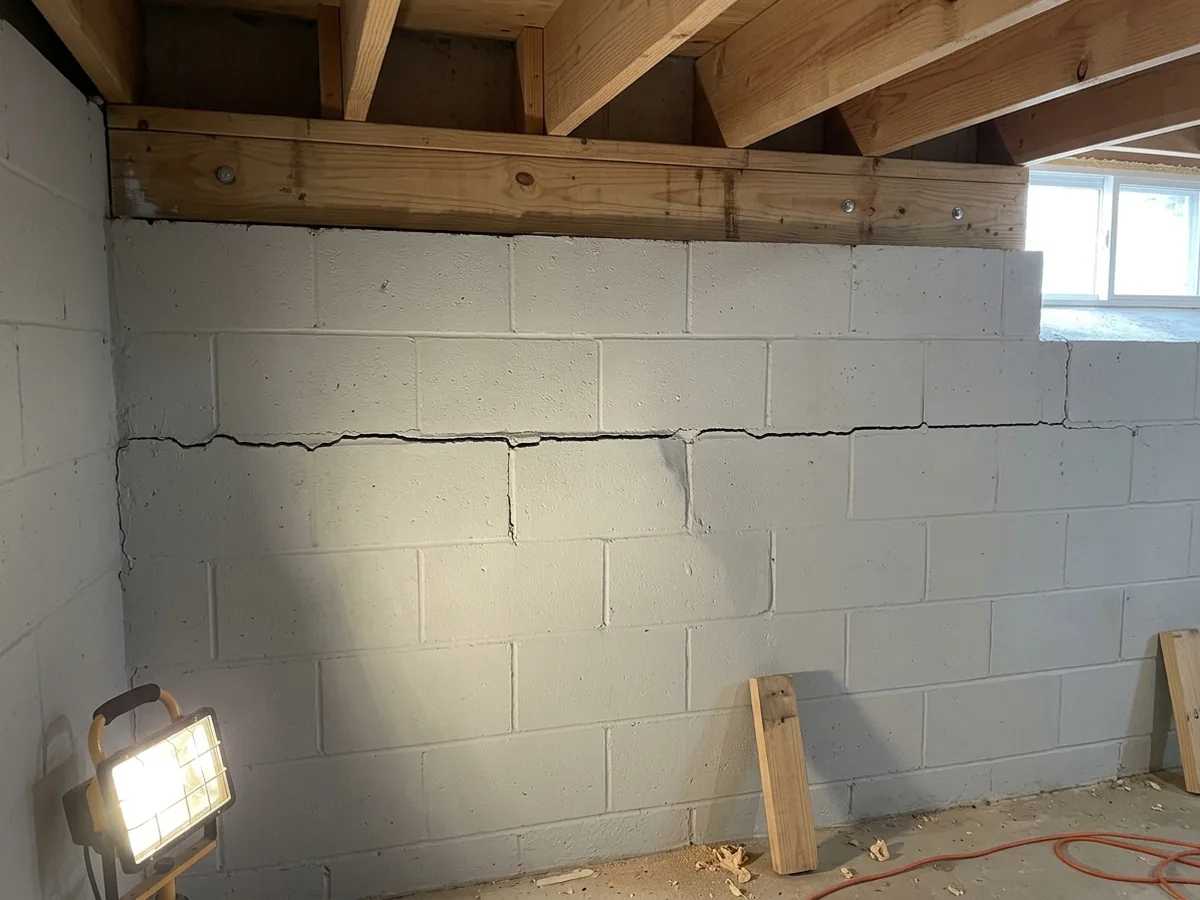
Horizontal Cracks
A horizontal crack is the one not to seal and forget. It usually means soil pressure is bending the wall, so it is a bowing-wall problem before it's a crack problem, and filling it does nothing to stop the wall. HomeGuide lists horizontal cracks longer than 12 inches among the warning signs that need a professional right away. The bracing options and how far a wall can move before it's rebuilt are on bowing basement wall repair. If it's widening, have an engineer look (foundation inspection).
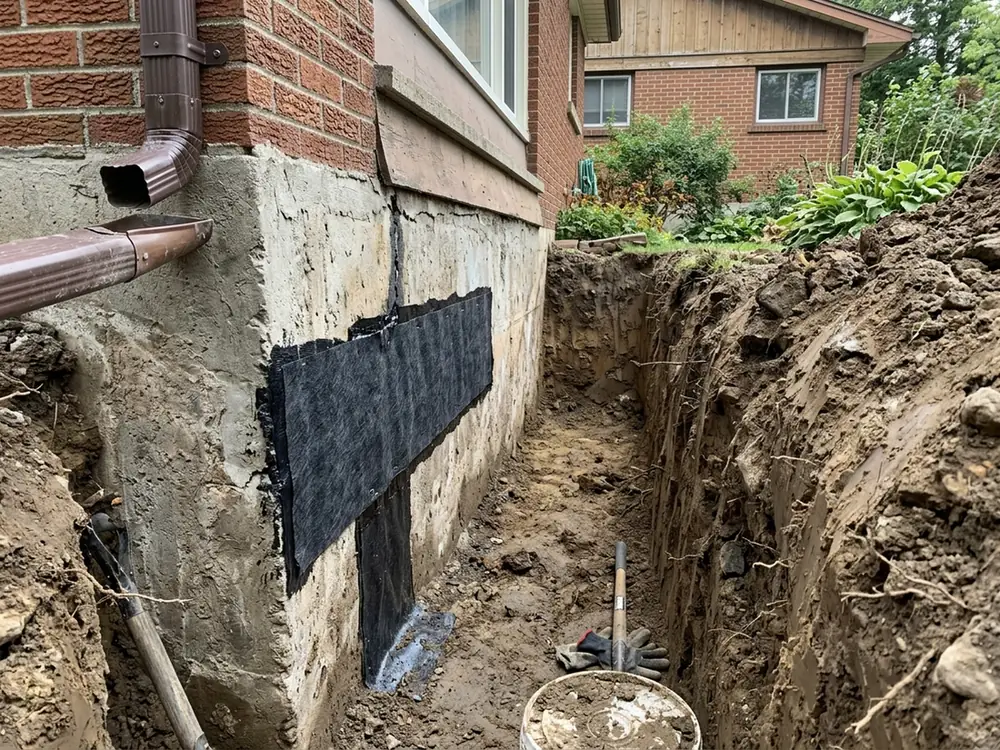
Exterior Crack Sealing (Dig-Down)
Sometimes the crack can't be reached from inside: the basement is finished, shelving or a stair is built against it, or it's a block wall that won't take injection. Then the contractor digs down outside to the crack, cleans and seals the wall face, covers it with a membrane and backfills. It costs more than injection because of the excavation. In our view it pays off most when the drainage at that spot needs work too. HomeGuide prices full exterior waterproofing, with excavation around the foundation, membranes and drainage, at $10,000 to $18,000. A single dig-down is a much smaller job, so get it priced on its own.
Why Ann Arbor homeowners call Ann Arbor Foundation Pros
- The estimate is free, and you can ask for it in writing
- Your request goes to one foundation contractor, not five
- Method, pier or brace count and price on paper before work starts
- The referral costs homeowners nothing
Foundation Crack Repair Cost and How Soon to Act
No named source publishes Ann Arbor crack repair prices. HomeGuide's national figures, from its July 2025 and February 2026 guides:
Hairline or vertical crack, injected
$250 to $800 or more per crack.Wide, horizontal or stair-step crack
$1,000 to $5,000 or more per crack, because the repair usually comes with reinforcement.Cracks in a wall that is also bowing
$5,000 to $15,000 or more for the wall.Major structural repair
$10,000 to $30,000 or more.
A crack that was patched before costs more, since the old patch has to come out first. So does one behind a finished wall or in a tight corner. HomeGuide's timing advice is blunt: deal with horizontal cracks right away, plan to repair vertical cracks within about six months, and seal hairlines within a year so water doesn't widen them.
What Should a Crack Repair Estimate Say?
A crack repair estimate should name each crack, its location, length and widest reading, and the material to be injected or applied. It should say whether the crack was judged stable or moving, and why. If the price assumes the crack has stopped, ask what the contractor will do if it reopens.
If the contractor recommends bracing or piers on top of injection, the estimate should say which crack or wall reading led to it. A list of measured cracks also helps later. Michigan's seller disclosure form asks about structural repairs, so keep the estimate, the invoice and the photos together.
See basement floor repair for cracks in the slab rather than the walls, and carbon fiber straps for reinforcing a cracked poured wall that has started to bow.