
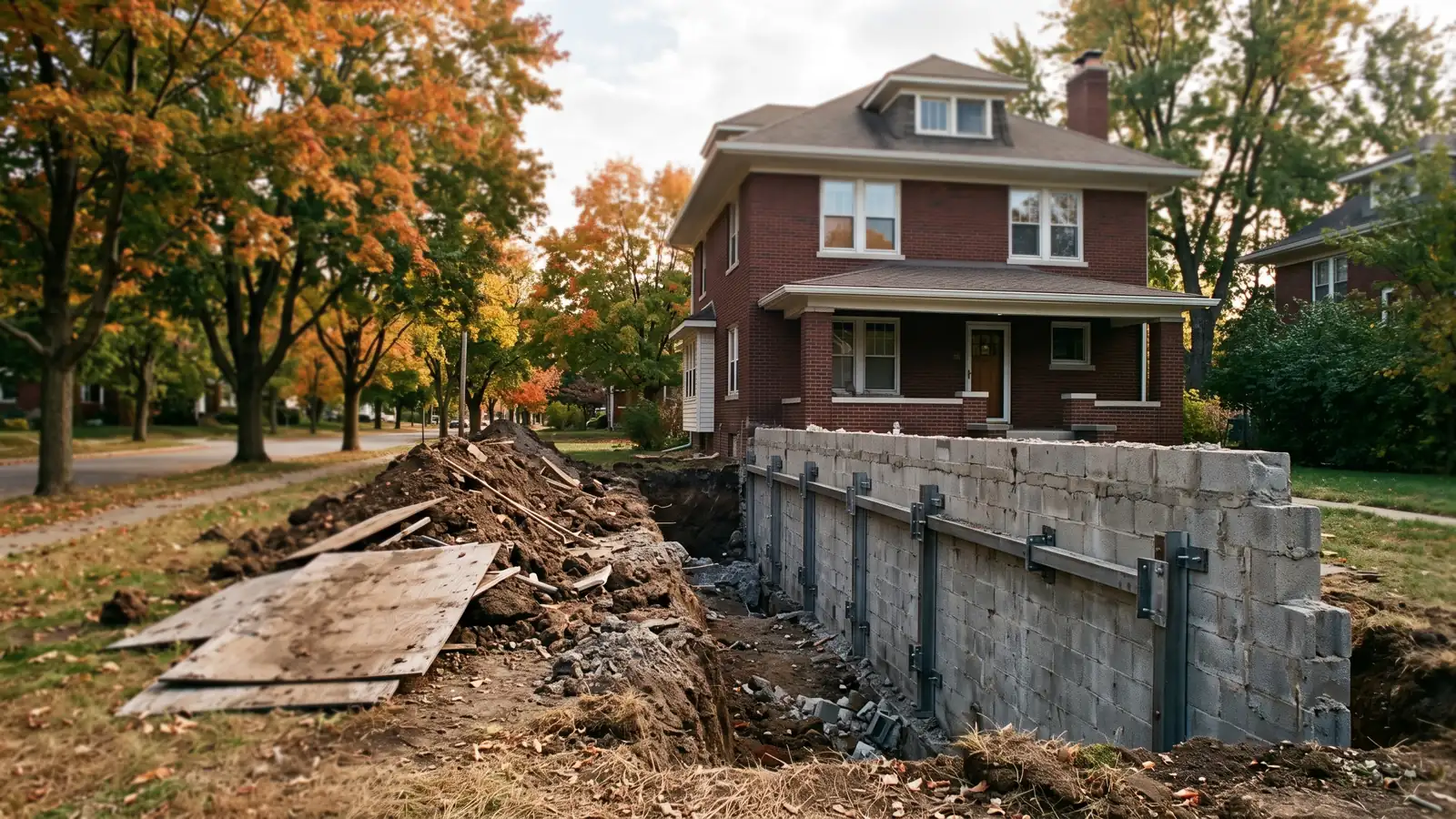
Basement Leak Points Beyond the Wall Crack
Before anyone quotes a fix, the leak needs a location. Water on the floor after a storm can come from a crack, a seam, a hole or the window, and they look alike once the puddle spreads. Note where it shows up first and after what kind of weather. A leaking crack in a poured wall has its own page, foundation crack repair; this one covers the rest.
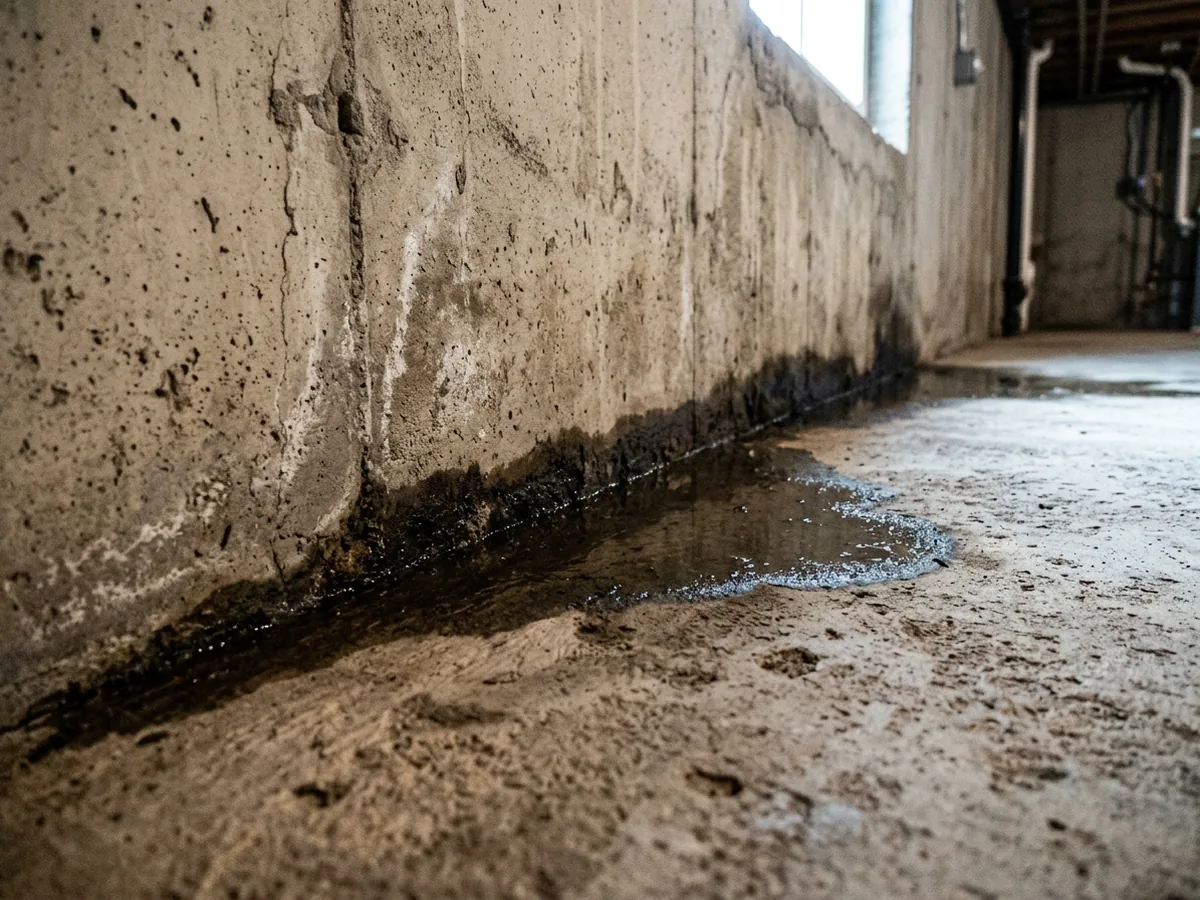
Cove Joint Leaks
A basement is built in three pours: the footing, then the walls, then the floor slab. The footing gets a channel along its top, called a keyway, that locks the wall in place. The slab is poured last, inside the walls, so a small gap remains between floor and wall. That seam is the cove joint, and when soil water rises against the footing, it comes up through the keyway and out at the cove. It's one of the most common sources of basement seepage.
The cove joint can't be caulked shut or packed with hydraulic cement, because water under pressure pushes past both. The repair is drain tile beside the footing that carries the water to a sump before it reaches the floor. Interior drain tile has one advantage over exterior: it also relieves the water pressure under the slab.
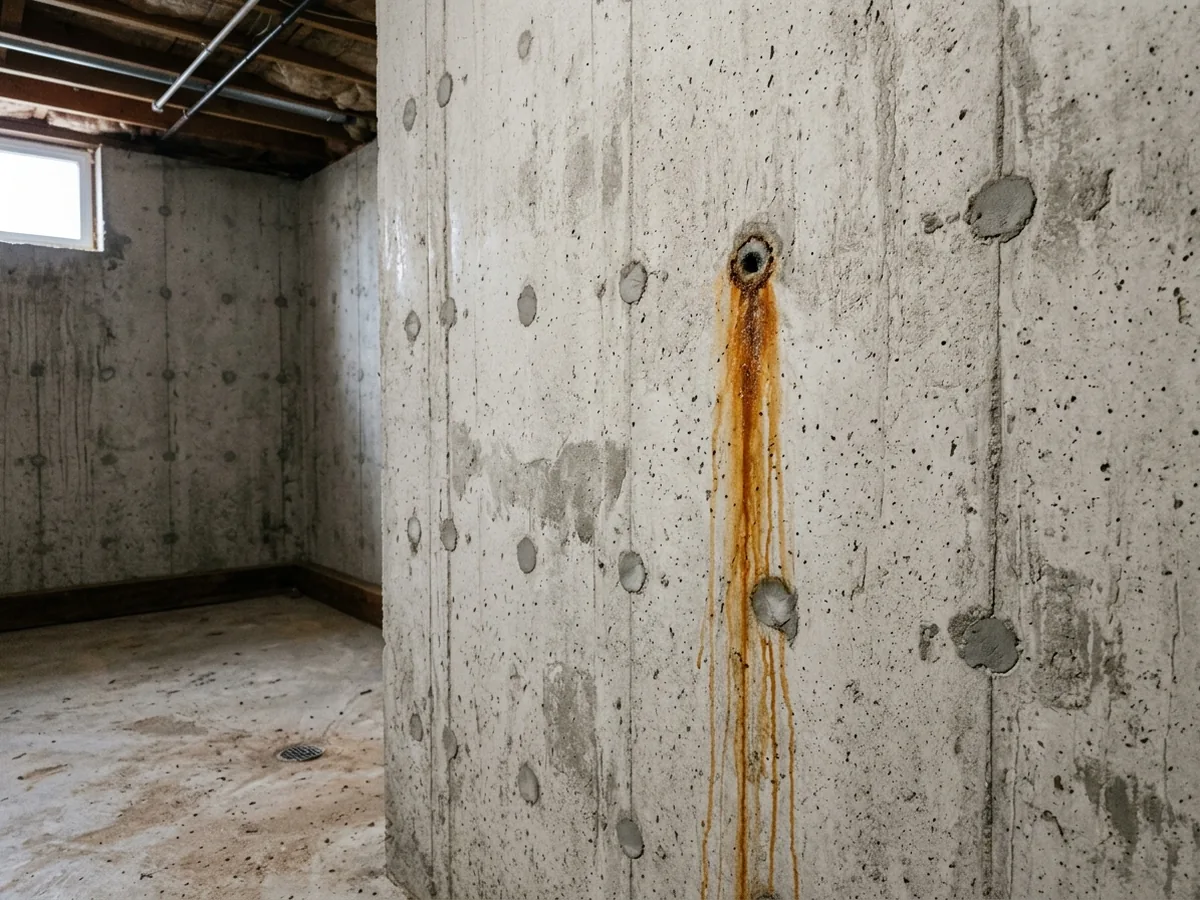
Tie-Rod and Pipe Penetration Leaks
Poured walls are cast between forms held together by ties, steel or plastic rods that run through the wall (Michigan's code lists the allowed materials). After the forms come off, the tie ends are snapped or cut, leaving rows of small holes or rod ends across the wall, plugged or patched. Some leak if they weren't sealed well, and the wet spots then line up with the tie pattern.
Pipe penetrations work the same way: wherever the water service, sewer, gas line or an old oil fill passes through the wall, there's a joint between pipe and concrete. Both can be sealed from inside with polyurethane injection, which stays flexible and expands into the gap, or by cutting out the old patch and repacking it. The fix is small, but only if it's at the right hole. Our view: if the stain lines up with a tie hole, start there before pricing drain tile.
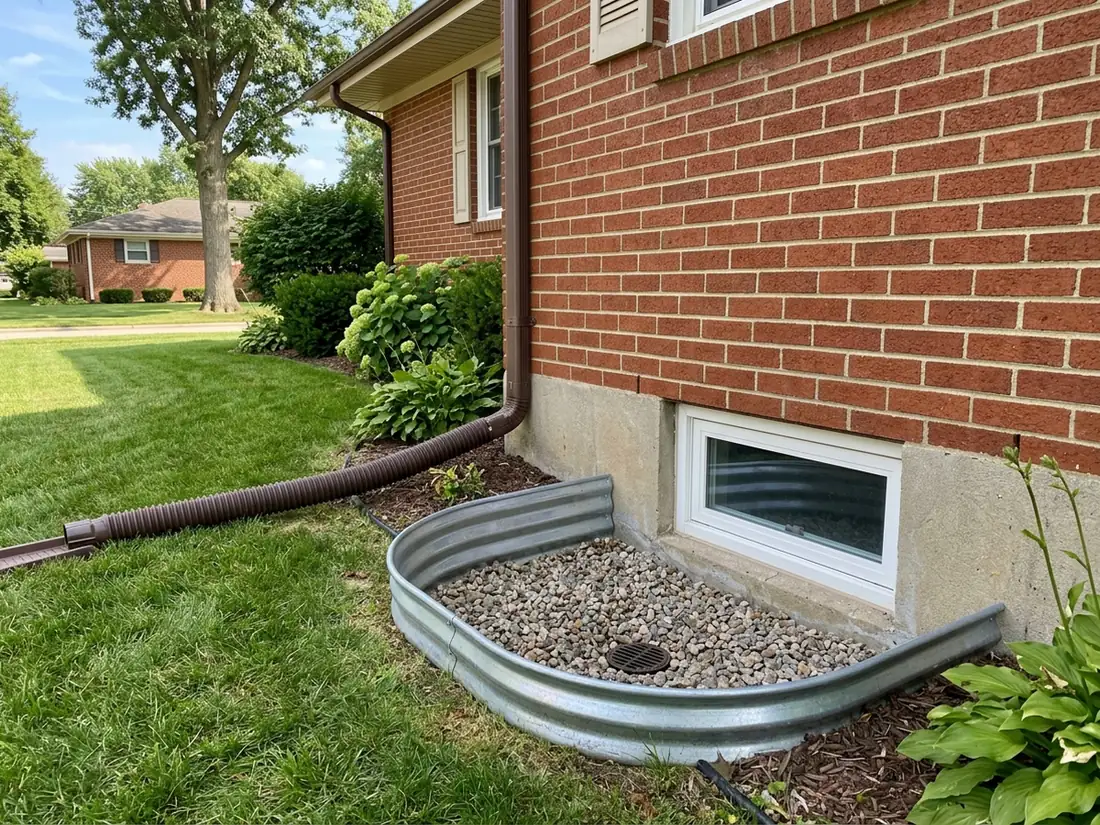
Window Well and Grade Leaks
A window well that fills with water during a storm will leak through the window frame, however good the window is. Michigan's code requires egress window wells to drain into the foundation drain or another approved system; an older hopper-window well may have nothing but soil at the bottom. Clearing the well down to gravel and connecting a drain fixes many "window leaks."
Then look at the ground. Michigan's code says the lot must be graded so surface water drains away from the foundation, with the grade falling at least 6 inches within the first 10 feet. Over decades, patios sink, mulch beds build up and downspouts end up dumping at the corner. HomeGuide prices regrading around a house at $1,000 to $5,000 (January 2026). It's often the cheapest fix that works, and it should be tried before the expensive ones.
Interior Drain Tile at a Problem Wall
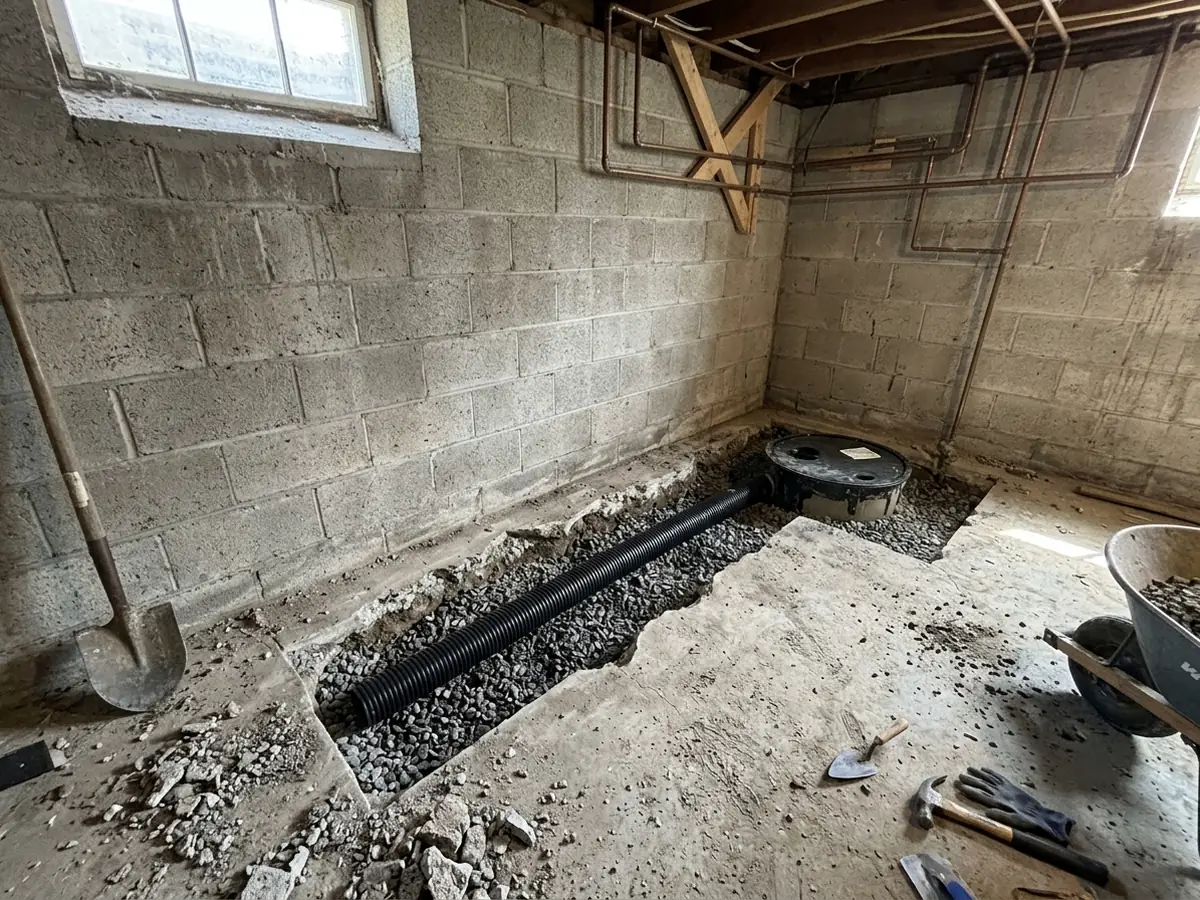
When one wall leaks along its base, drain tile doesn't have to go around the whole basement. The slab is cut along that wall, the trench dug down beside the footing, and perforated pipe in washed gravel runs to a sump basin.
The code requires drains around concrete and masonry foundations that enclose living or usable space below grade, discharging by gravity or by pump. Drain pipe sits on at least 2 inches of washed gravel and is covered by at least 6 inches of it, with filter fabric to keep soil out. A partial run should be built to the same spec as a full one.
One Ann Arbor detail: the city's expedited residential permit covers basement waterproofing for existing systems only, with no new discharge. A new sump that pumps to a new outlet outside needs the regular permit route. HomeGuide puts an interior French drain at $4,000 to $17,000 and a sump pump at $600 to $2,500 or more (January 2026).
Why Ann Arbor homeowners call Ann Arbor Foundation Pros
- The estimate is free, and you can ask for it in writing
- Your request goes to one foundation contractor, not five
- Method, pier or brace count and price on paper before work starts
- The referral costs homeowners nothing
Is a Basement Leak a Foundation Problem or a Waterproofing Job?
Usually water, not structure, but check. A leak at the cove joint, a tie hole or a window well is a water problem. A leak through a crack that is widening, or along a horizontal crack in a block wall, means the wall itself is moving, and the leak is the symptom. Fix the wall first (bowing basement wall repair), then the water. Whole-house waterproofing, with membranes dug in around every wall, is its own trade that may come before or alongside the foundation work; Michigan licenses basement waterproofing as a separate trade on a contractor's licence (more on the foundation inspection page).
What Decides the Price of Basement Leak Repair?
The leak's location and the fix it needs. One sealed tie hole or pipe costs little; a cut-and-trench drain tile run costs more by the foot; an exterior dig costs the most. HomeGuide's January 2026 national figures put interior waterproofing at $6,000 to $12,000 and exterior waterproofing at $10,000 to $18,000. What moves a quote: finished walls to remove, slab thickness, how far to the sump, whether a sump and discharge exist already, and how much yard is regraded. Ask for each leak point to be listed with its own fix and price.
See also block foundation repair and basement wall replacement.