
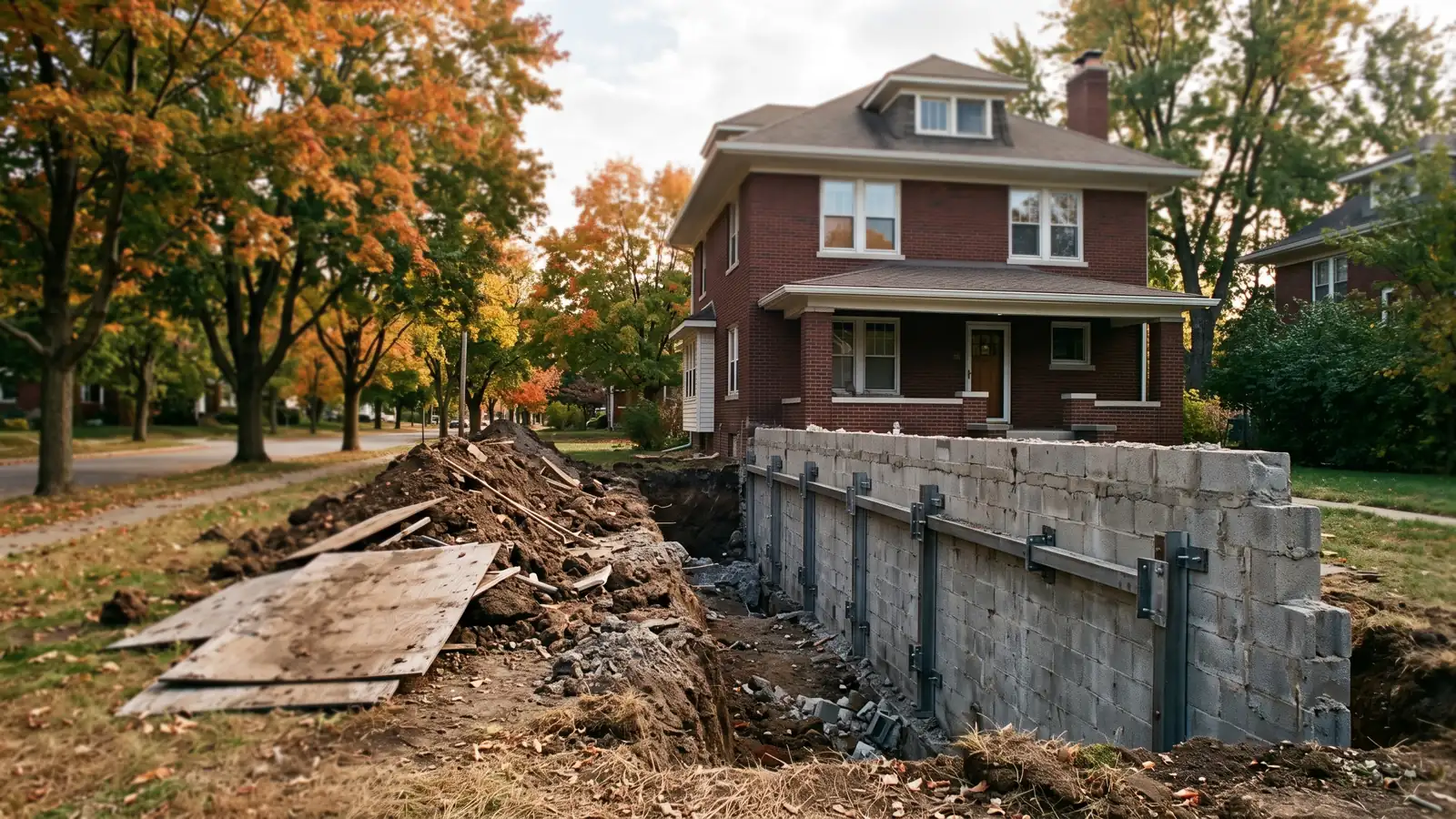
Garage Slab Repairs: Cracks, Settling, Heave and Replacement
A garage floor has a harder life than a basement floor. It sits right at grade, takes the weight of cars, and gets salty slush dripped on it all winter, then refreezes on cold nights. Each problem below has its own repair, and some floors have two at once.
Cracked Garage Floor Repair
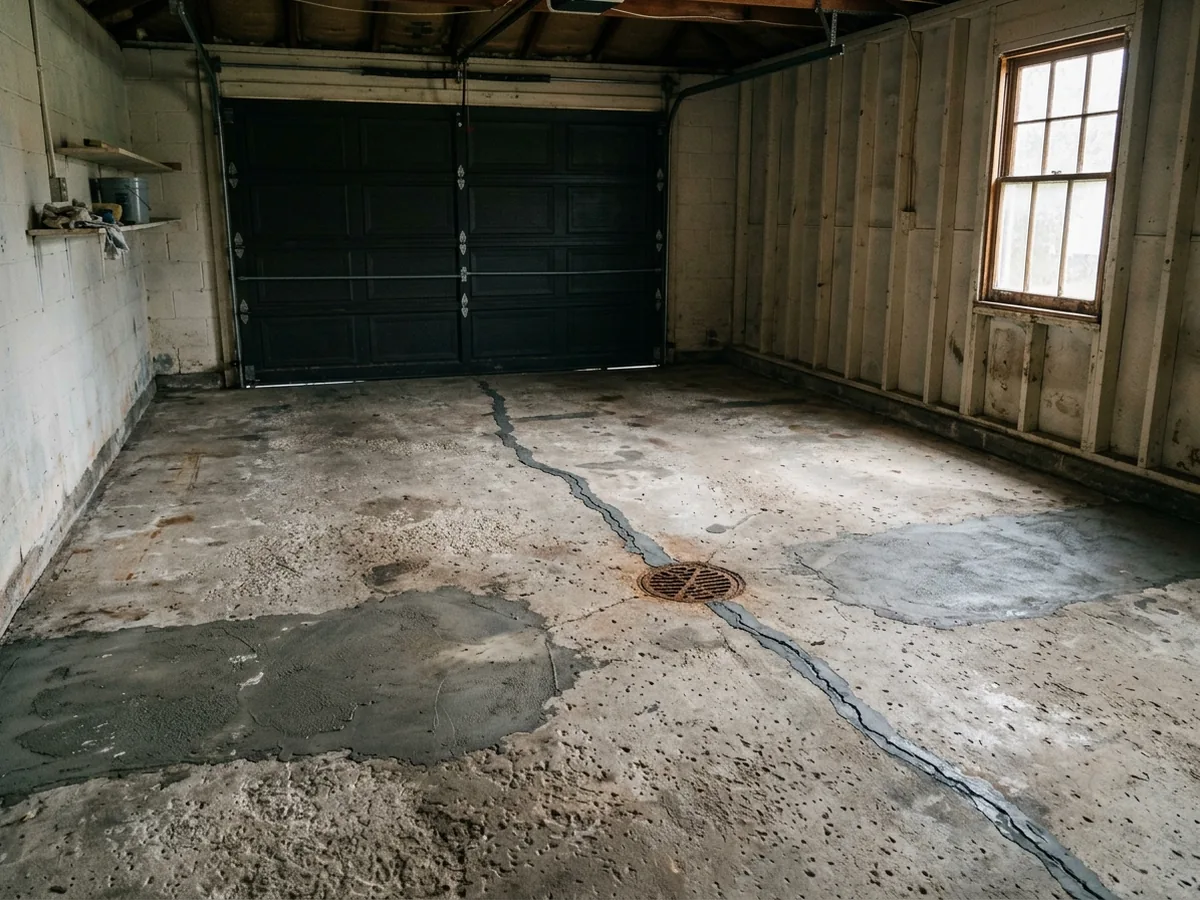
Hairline cracks under 1/8 inch, with both sides flush, are cosmetic. They get cleaned out and filled with a polymer-modified cement grout, a flexible sealant or an epoxy. Many garage slabs have saw-cut control joints, and a crack running along one is doing what the joint was cut for. A crack that wanders across the slab away from the joints, or one where one side has dropped, is the kind to have looked at. Wider cracks have structural causes, and HomeGuide describes the repair as routing the crack and stitching it with steel reinforcing bars set across it in epoxy.
Spalling is the other common complaint: the top layer flakes off in patches, often where tires park and road salt drips. Small areas are patched with a trowel-applied repair mortar; a whole floor of it calls for resurfacing or replacement.
HomeGuide's February 2026 national figures: $200 to $1,000 for crack patching and $500 to $3,000 or more for spalling repair.
Sunken Garage Slab Lifting
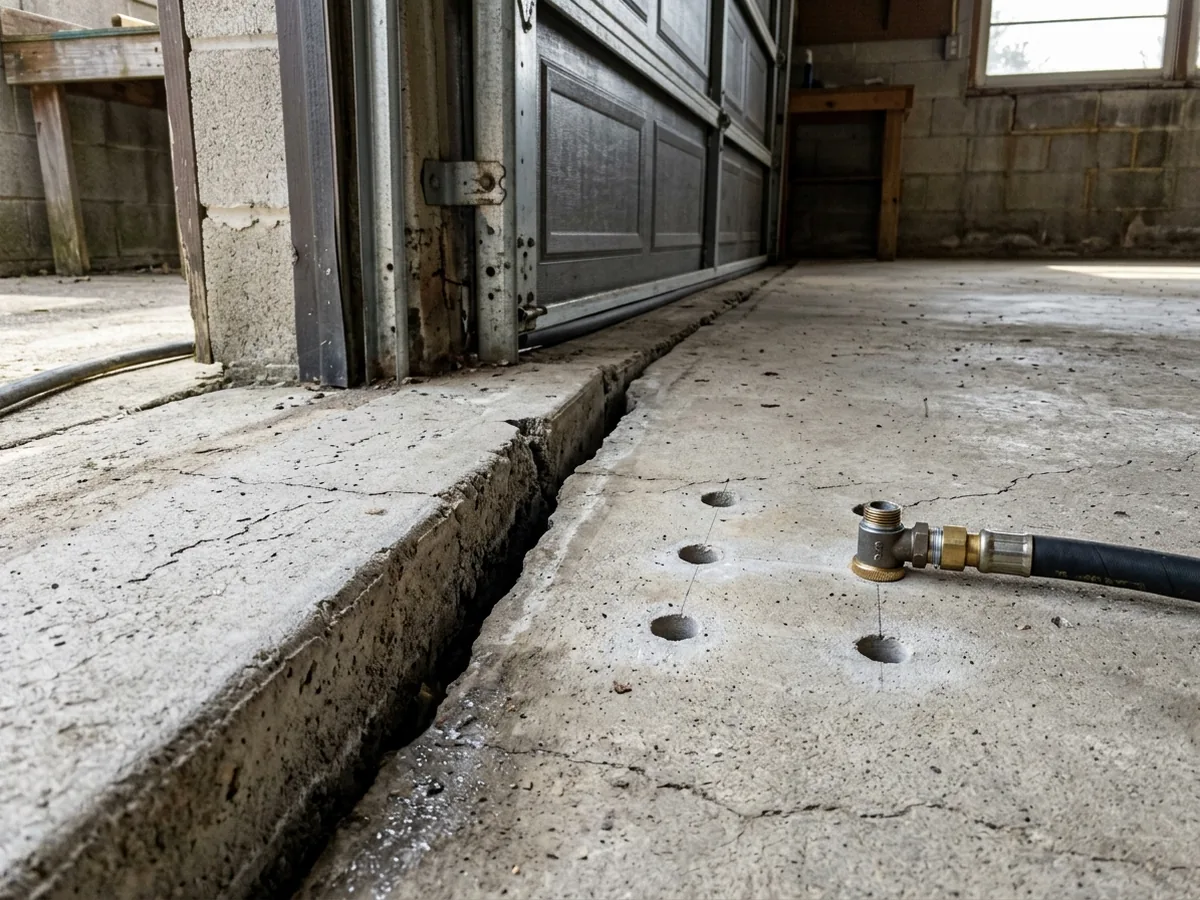
Garage floors usually drop along the edges, where the soil backfilled against the foundation was never compacted well, or toward the front where water runs in under the door. The slab tilts, a gap opens at the wall, and the floor drains toward the house instead of out.
If the slab is still mostly in one piece, it can be lifted: holes are drilled through it, and expanding polyurethane foam or a cement slurry is pumped underneath until it rises. The trade-offs between the two materials are on concrete lifting and leveling. HomeGuide gives $300 to $2,000 or more for mudjacking part of a garage floor, and $1,100 to $5,400 or more for the whole floor.
Frost-Heaved Door Apron
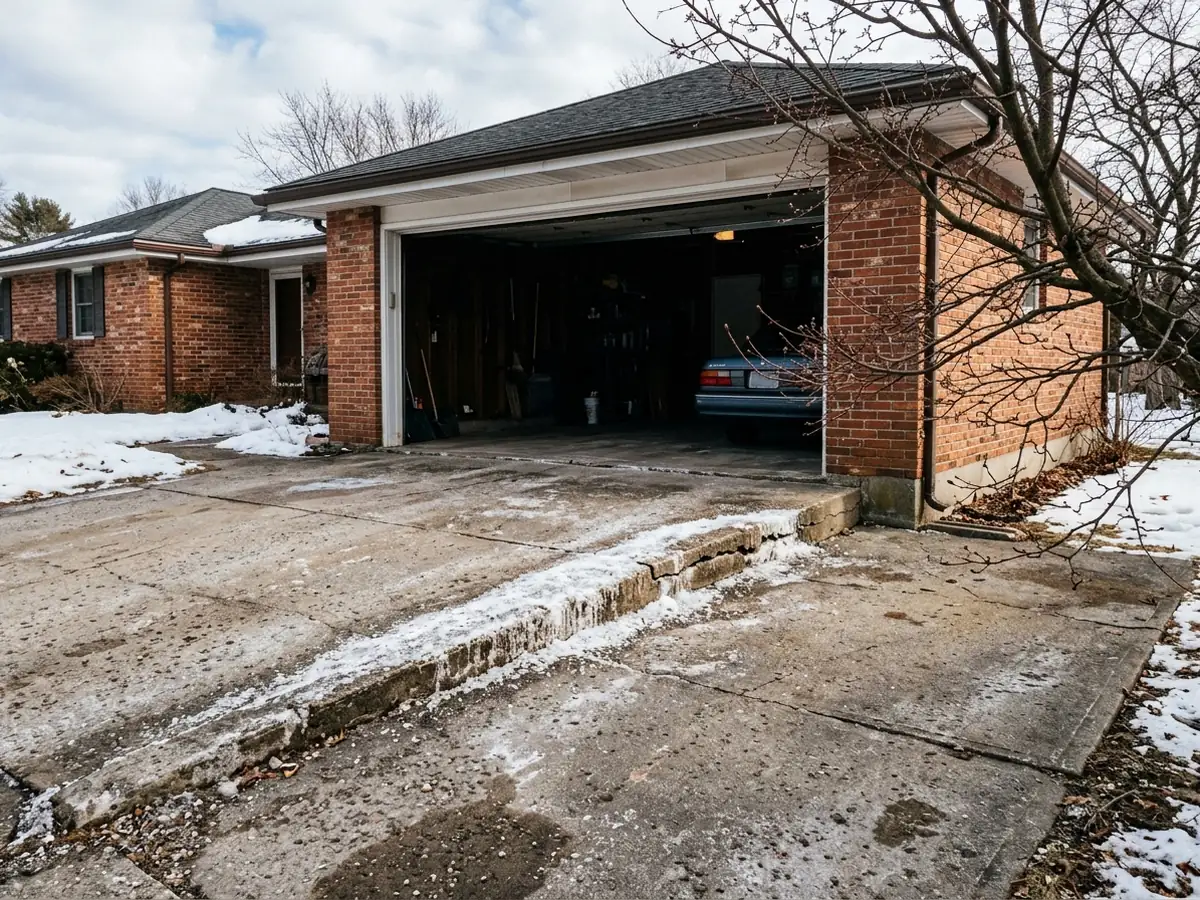
The apron, the strip of slab under the overhead door and just outside it, is the part most likely to heave. Water runs off the driveway toward the door, soaks into the soil under the slab edge, and freezes. The apron rises in January, the door won't seal or scrapes, and in spring it settles back a little lower and a little more cracked.
The garage's foundation walls are deep enough to stay below frost (Michigan's footing depth is on helical piers for decks and additions); the floor slab and apron aren't, so they move. The lasting fix is mostly about water:
- Driveway and grade sloped so water doesn't pond at the door.
- Downspouts sent away from the garage corners.
- The heaved apron cut out, the wet soil under it replaced with compacted gravel, and a new apron poured and tied to the slab with steel dowels.
Re-pouring an apron without changing the drainage just buys a few winters.
Garage Slab Replacement
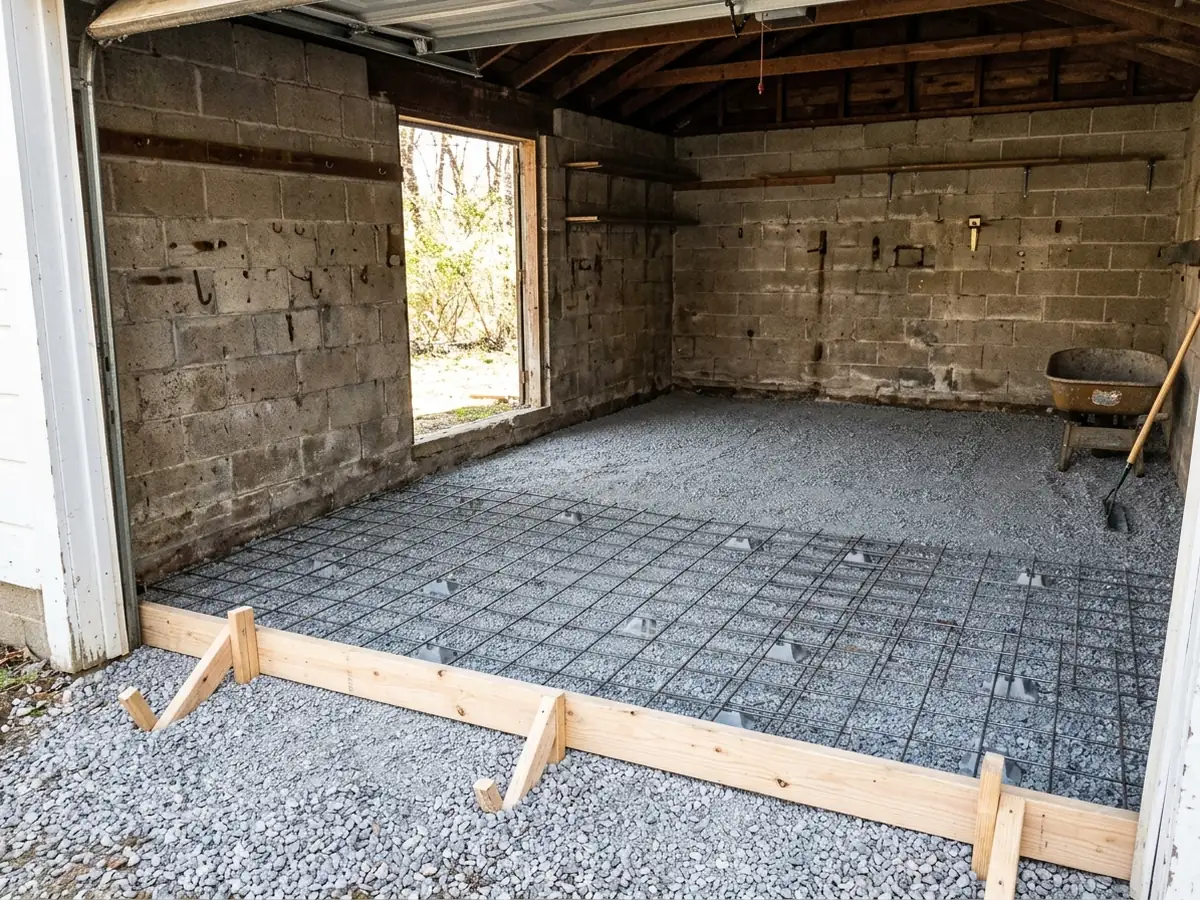
When the floor is broken into many pieces, has heaved and settled for years, or is spalled across most of its surface, it's time to price replacement next to another round of patching. The old slab is broken out and hauled away, the base is regraded and compacted, and a new slab is poured, sloped toward the door or a drain. The code minimums for a slab on the ground (thickness, base and vapor retarder) are listed on basement floor repair.
HomeGuide's November 2025 figures: $10 to $16 or more per square foot, or $4,000 to $6,400 for a 20-by-20 two-car garage. Replacement takes 2 to 4 days start to finish, plus curing time before you park on it. Winter pours cost more: cold-weather additives add $1 to $2 per square foot.
Why Ann Arbor homeowners call Ann Arbor Foundation Pros
- The estimate is free, and you can ask for it in writing
- Your request goes to one foundation contractor, not five
- Method, pier or brace count and price on paper before work starts
- The referral costs homeowners nothing
Garage Floor: Should You Patch, Lift or Replace It?
Patch when the cracks are flush and narrow and the slab is still level. Lift when the slab is in one piece but has dropped or tilted. Replace when it is broken into pieces, heaves every winter, or is spalled across most of the floor. Our view: a floor with several of these problems at once is usually a replacement.
Ask the contractor why they recommend one over the others. A lift on a slab that's cracked into five pieces may raise five pieces unevenly. A re-pour on a floor that only sank at one corner is more than the job needs.
What to Check in a Garage Floor Estimate
The cause named
Settled backfill, water at the door, or a base that was never compacted.Square footage and thickness
for anything being poured, and the base under it.Drainage
Whether regrading, downspout work or a trench drain is included or left to you.Timing
How long until you can walk on it and drive on it. Late-fall pours here run into freezing nights (the homepage has Ann Arbor's freeze figures).Coatings
If you want an epoxy or polyaspartic coating later, ask how long the new slab should cure first.
For driveways, walks and patios outside, see concrete lifting and leveling; for steps at the garage door into the house, concrete step and porch repair.